Picture this: you’re capturing a perfect sunset when your camera suddenly slips from your grip, dangling precariously as your heart skips a beat. Or perhaps you’ve ended a day of shooting with an aching neck and sore shoulders, wondering why something meant to help carry your gear has become a source of pain. These scenarios are far too common among photographers who underestimate one crucial accessory.
The camera strap is more than just a way to hang your equipment around your neck. It’s a critical piece of gear that directly impacts your comfort during long shoots, the security of your expensive equipment, and your creative freedom to move and capture moments without hesitation. Yet many photographers stick with the basic strap that came in the box, never realizing how much better their experience could be.
A poor strap choice leads to real consequences: persistent discomfort that cuts shoots short, unsafe handling that risks dropping your camera, and even long-term physical strain. This guide will help hobbyists and casual users navigate the world of camera straps to find affordable, easy-to-use carrying solutions that make photography safer, more comfortable, and ultimately more enjoyable.
Why Your Camera Strap Choice Matters More Than You Think
Most photographers treat their camera strap as an afterthought, but this simple accessory plays a surprisingly vital role in your photography experience. Beyond merely holding your camera, the right strap serves as your first line of defense against accidental drops that could destroy thousands of dollars of equipment in an instant. A secure strap keeps your gear safely attached to your body even when your hands are occupied adjusting settings, changing lenses, or navigating tricky terrain.
Physical comfort becomes critical during extended shooting sessions. An inadequate strap concentrates your camera’s weight on a small area of your neck or shoulder, leading to muscle fatigue, pain, and the frustration of having to cut a shoot short just when the lighting turns perfect. Quality straps distribute weight effectively, allowing you to carry your camera for hours without discomfort. They also enable quicker access to your camera—when a fleeting moment appears, you need to bring your camera to eye level instantly, not fumble with a tangled or restrictive strap.
For hobbyists and casual photographers, these practical benefits transform photography from a cumbersome chore into genuine enjoyment. When your gear feels secure and comfortable, you shoot with more confidence, explore locations more freely, and focus entirely on capturing great images rather than managing physical discomfort or worrying about equipment safety.
Top Camera Strap Types for Secure Carry and Comfort
Understanding the different strap types helps you match your carrying solution to your specific shooting style and comfort needs. Each design offers distinct advantages depending on how you photograph.
Neck Straps: The Classic Choice
Neck straps are what typically come bundled with your camera—a straightforward design that loops around your neck and lets the camera hang at chest level. They provide completely hands-free carrying and keep your camera instantly accessible. However, they concentrate all the weight on your neck, which becomes uncomfortable quickly with heavier setups. Look for models with anti-slip padding that grips your neck gently and prevents the strap from sliding around as you move.
Shoulder Straps: For All-Day Comfort
Shoulder straps cross your body diagonally or rest on one shoulder, positioning the camera at your hip or lower ribcage. This design distributes weight across your stronger shoulder muscles rather than your neck, making them ideal for travel days and long walks. Wide, padded sections prevent the strap from digging into your shoulder, while adjustable length lets you position the camera exactly where you want it. They’re particularly effective for tourists and casual photographers who carry a camera throughout the day.
Wrist Straps: Ultimate Security for Active Shooters
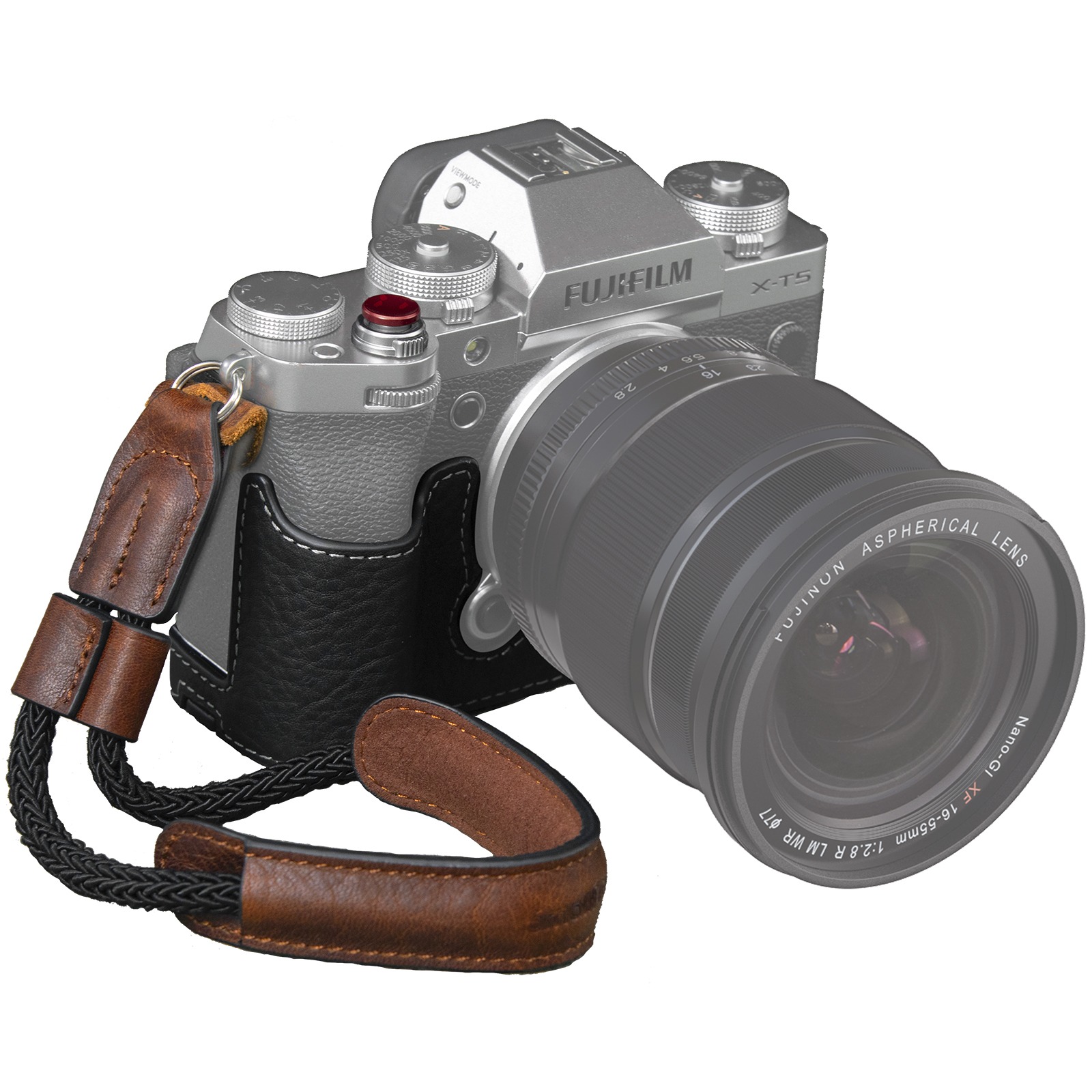
Wrist straps create a secure loop around your wrist, keeping the camera tethered to your hand during active shooting. They excel at preventing drops when you’re shooting quickly at events, doing street photography, or working in crowded environments where a dangling camera might bump into things. The downside is that they don’t help you carry the camera when you’re not actively shooting—your hand bears the full weight, making them less suitable for all-day carrying.
Harness & Sling Systems: The Heavy-Duty Solution
Harness systems use straps across both shoulders and around your torso to distribute weight evenly across your entire upper body. They’re designed for photographers carrying heavier camera bodies with substantial lenses, or those who need to carry multiple cameras simultaneously. While they provide exceptional weight distribution and security, they require more time to put on and adjust, and their complexity may be unnecessary for hobbyists with lighter gear.
Key Features to Look for in a Quality Camera Strap
When evaluating camera straps, certain features separate reliable options from those that will disappoint you in the field. Material durability forms the foundation—nylon webbing offers excellent strength-to-weight ratio and weather resistance at affordable prices, while leather provides a classic aesthetic with natural grip but requires more maintenance. Canvas strikes a middle ground with comfortable texture and reasonable durability.
Width and padding directly determine comfort during extended use. Straps narrower than one inch concentrate weight into a small area, causing discomfort within an hour. Look for wider designs with memory foam or neoprene padding that cushions pressure points without adding bulk. Quick-release mechanisms enhance both convenience and safety—quality buckles let you detach your camera instantly when transitioning to a tripod, while breakaway safety features prevent strangulation if the strap catches on something.
Adjustable length is non-negotiable since photographers have different body sizes and preferences for camera positioning. Secure carry depends critically on attachment points—reinforced stitching at connection points, locking carabiners, or robust anchor loops prevent the catastrophic failure of your strap separating from your camera. Finally, non-slip surfaces on the shoulder or neck contact area keep the strap positioned correctly, preventing constant readjustment that disrupts your shooting flow and causes irritation.
Your Step-by-Step Guide to Choosing the Perfect Strap
Finding the right camera strap doesn’t require guesswork when you follow a systematic approach tailored to your specific photography habits and equipment.
Step 1: Assess Your Primary Use. Consider where and how you typically shoot. Tourist photographers walking through cities all day need different solutions than those shooting family gatherings indoors or hiking nature trails. Your shooting environment determines whether you prioritize all-day comfort, quick accessibility, or rugged durability.
Step 2: Evaluate Your Gear. Weigh your camera with your most frequently used lens attached. Compact mirrorless setups under two pounds can work comfortably with basic neck straps, while heavier DSLR combinations exceeding three pounds demand shoulder straps or harness systems that distribute weight more effectively. Be honest about your actual setup weight—it matters more than you think.
Step 3: Prioritize Your Need. Identify your primary concern. If you’re clumsy or shoot in crowded spaces, maximum security through wrist straps or locking attachment points takes priority. For photographers covering events lasting several hours, all-day comfort through padded shoulder straps becomes essential. Street photographers benefit most from quick-access designs that bring the camera to shooting position instantly.
Step 4: Set Your Budget. Quality camera straps range from fifteen to fifty dollars for most hobbyist needs. Determine what you can comfortably spend, knowing that even affordable options deliver significant improvements over basic included straps when chosen thoughtfully.
Step 5: Test and Adjust. Once you receive your strap, spend time adjusting it with your actual camera attached. Walk around your home, practice raising the camera to your eye, and simulate your typical shooting movements. Proper adjustment transforms an average strap into one that feels custom-made for your body and shooting style.
Integrating Your Strap with Smart Gear Storage
Your camera strap doesn’t work in isolation—it’s part of a complete carrying ecosystem that includes how you store and protect your gear when you’re not actively shooting. The most effective approach combines a secure, comfortable strap for active photography with a protective bag for transport and storage between shooting sessions.
Quality camera bags with organized compartments complement your strap by providing safe storage for extra lenses, batteries, and accessories while keeping everything accessible. Modular systems like those from SmallRig offer customizable interior dividers that adapt to your specific gear collection, ensuring each piece has a protected space. This prevents the chaos of digging through a cluttered bag when you need to swap lenses quickly.
The practical workflow is straightforward: wear your camera on its strap during active shooting for instant access and security, then safely stow it in your protective bag when moving between locations, taking breaks, or finishing your session. This combination addresses both immediate shooting needs and long-term gear protection. For hobbyists seeking affordable solutions, investing in both a quality strap and a well-designed camera bag creates a complete system that keeps your equipment safe, organized, and ready to capture any moment without breaking your budget.
Elevate Your Photography Experience with the Right Strap
The right camera strap represents one of the simplest yet most impactful upgrades you can make to your photography toolkit. This single accessory transforms your shooting experience by providing secure carry that protects your investment, delivering comfort that lets you shoot longer without pain, and offering quick access that ensures you never miss a fleeting moment. What seems like a minor detail actually shapes whether photography feels like a burden or a pleasure.
By following the step-by-step guide in this article, you can identify exactly which strap type matches your shooting style, evaluate features that matter for your specific gear, and make an informed choice within your budget. Remember that your strap works best as part of a complete system—paired with smart gear storage solutions that keep your equipment organized and protected when you’re not actively shooting.
Take the time to choose thoughtfully, adjust properly, and invest in both a quality strap and protective bag. These affordable, easy-to-use solutions address the real challenges hobbyists face, letting you focus entirely on what matters most: capturing beautiful images with confidence, comfort, and the freedom to explore your creative vision without equipment worries holding you back.