
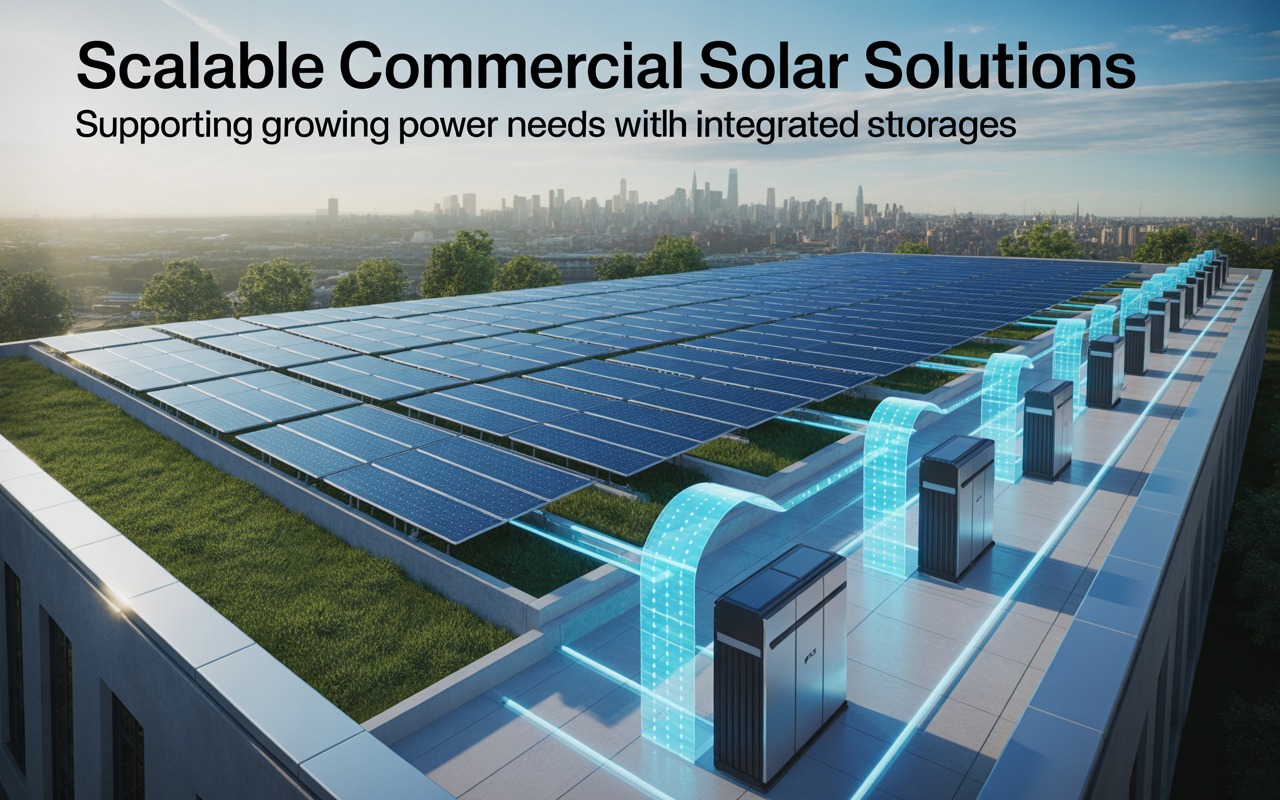
Energy needs are growing fast. Offices, factories, warehouses, shopping centers, and data facilities all depend on stable and affordable power. At the same time, energy costs are rising, and businesses are under pressure to reduce their environmental impact.
This is why more companies are turning to solar power.
But installing solar panels alone is not always enough. Solar energy is clean and cost-effective, but it does not produce power all the time. To truly meet growing power needs, businesses need smarter systems that combine solar generation with energy storage.
This is where scalable commercial solar solutions with integrated storage systems make a real difference.
Why Businesses Are Choosing Commercial Solar
Commercial solar systems allow businesses to generate their own electricity. By using rooftop space or nearby land, companies can reduce their dependence on the grid and lower long-term energy costs.
Solar power also helps businesses meet sustainability goals. It reduces carbon emissions and supports cleaner operations. For many companies, this is not just good for the environment. It is good for their brand and future planning.
However, solar power production depends on sunlight. Power demand, on the other hand, is constant. This gap creates challenges.
The Power Problem Without Storage
Solar panels produce the most energy during the middle of the day. But many businesses use more power in the morning, evening, or during peak operating hours.
Without storage, excess solar energy is often sent back to the grid or wasted. When solar production drops, businesses must rely on grid electricity, which can be expensive and unstable.
This is why energy storage is becoming a key part of modern solar projects.
How Integrated Energy Storage Systems Help
An integrated solar energy storage system stores extra solar power during the day and releases it when it is needed most. This simple idea creates major benefits.
First, it improves energy reliability. Stored energy can be used during peak demand, power outages, or grid instability. Second, it helps reduce energy costs by limiting the need for expensive grid electricity. Third, it allows businesses to use more of the solar power they generate.
When solar and storage work together, energy becomes more predictable and easier to manage.
Scalable Solutions for Growing Businesses
One of the biggest advantages of modern commercial solar systems is scalability. Businesses grow, and energy needs change. A good energy system should grow with them.
Scalable commercial solar solutions are designed to expand over time. More panels can be added. Storage capacity can be increased. Control systems can be upgraded.
This flexibility is especially important for industries such as manufacturing, logistics, retail, and data services, where energy demand can increase quickly.
Integrated energy storage systems support this growth by balancing power supply and demand at every stage.
Smart Energy Management Makes the Difference
Modern commercial solar systems are not just about hardware. They rely on smart energy management systems.
These systems monitor solar production, battery levels, and energy usage in real time. They decide when to store energy and when to release it. They also help reduce waste and improve efficiency.
With smart control, businesses can shift energy use to off-peak hours, reduce peak demand charges, and improve overall performance.
This intelligence turns solar power into a reliable business asset.
Supporting Grid Stability and Backup Power
Power outages and grid disruptions can be costly for businesses. Even short interruptions can lead to lost productivity, damaged equipment, and customer dissatisfaction.
Integrated energy storage systems provide backup power when the grid fails. Stored solar energy can keep essential systems running until normal power is restored.
In some cases, businesses can operate independently from the grid for short periods. This added resilience is becoming more valuable as power networks face increased pressure.
A strong solar energy storage system improves not only efficiency but also energy security.
Designed for Real Commercial Use
Commercial energy systems must work in real-world conditions. They must handle high loads, long operating hours, and changing energy patterns.
Modern solar and storage solutions are designed with this reality in mind. They use durable components, advanced safety features, and easy-to-use monitoring tools.
Systems are also built to meet commercial standards for safety and performance. This reduces risks and ensures long-term reliability.
You can explore integrated solutions that combine solar generation and energy storage to support business operations efficiently and safely.
Lower Costs and Long-Term Value
One of the main reasons businesses invest in solar and storage is cost savings.
By generating their own power and storing it, companies can reduce electricity bills and protect themselves from future price increases. Over time, these savings can be significant.
Energy storage also improves return on investment by increasing the usable portion of solar energy. Instead of selling excess power back to the grid at low rates, businesses can use stored energy when it has the highest value.
This makes integrated systems a smart long-term investment.
Final Thoughts
Growing businesses need energy systems that can grow with them. Solar power alone is not enough. Storage is the missing piece.
By combining solar generation with a reliable solar energy storage system, businesses gain control over their energy use, reduce costs, and improve resilience.
Scalable commercial solar solutions are not just about clean energy. They are about smarter energy, stronger operations, and a more sustainable future.


