
If you have ever experienced it yourself, you’ll know that bed bug infestations are notoriously difficult to eliminate once they become established inside a property. These insects hide deep inside mattresses, furniture, carpets, and small structural gaps, making them hard to reach with traditional pest control methods. This leaves one option for residents harbouring uninvited guests: calling out a professional pest control company.
Upon looking into available options, you’ll notice that pest control companies typically use one of two main approaches to eliminate infestations:
- Chemical treatments
- Heat treatment
Both methods are used across London, but they work in very different ways and are suited to different situations. This article delves into the differences between the two so you can make a more informed decision about which type of company you want to contact to rid your home of bed bugs.
How Chemical Bed Bug Treatments Work
Chemical treatments are the most traditional approach to bed bug control. Pest control technicians apply professional insecticides to areas where bed bugs are likely to hide, including:
- Mattress seams
- Bed frames
- Skirting boards
- Cracks and crevices
- Furniture joints
These products are designed to kill bed bugs when they come into contact with treated surfaces. However, chemical treatments usually require multiple visits, often spaced several weeks apart. This is because bed bug eggs may survive the initial treatment and hatch later. At a minimum, the chemical treatment programmes will involve two or three visits to fully eliminate the infestation. Therefore, be prepared to share your home for a little longer.
Why Spray Treatments Sometimes Struggle in London
One challenge with bed bug control in major cities such as London is the growing issue of insecticide resistance. Bed bugs have been exposed to chemical treatments for decades, and over time, many populations have developed resistance to commonly used insecticides.
This means that while spray treatments can still reduce activity, they may not eliminate an infestation, particularly in larger or long-established infestations. As a result, many pest control professionals combine treatments or use alternative methods when dealing with persistent infestations.
Challenges With Low-Cost Spray Programmes
Some local councils and low-cost pest control programmes offer basic chemical spray treatments for bed bugs. These services can help reduce bed bug activity, but they are often limited to a small number of visits and typically rely on standard insecticides. The other issue is that because bed bugs hide deep inside furniture, mattresses, and structural gaps, these treatments may not always reach the full extent of the infestation. Eggs can survive the initial treatment and hatch later, which is one reason spray programmes often require repeated visits. In practice, this can lead to situations where infestations appear to improve temporarily before bed bug activity returns.
For this reason, many pest control professionals now recommend heat treatment for more severe infestations, as it eliminates bed bugs at every stage of their lifecycle simultaneously.
How Heat Treatment Works
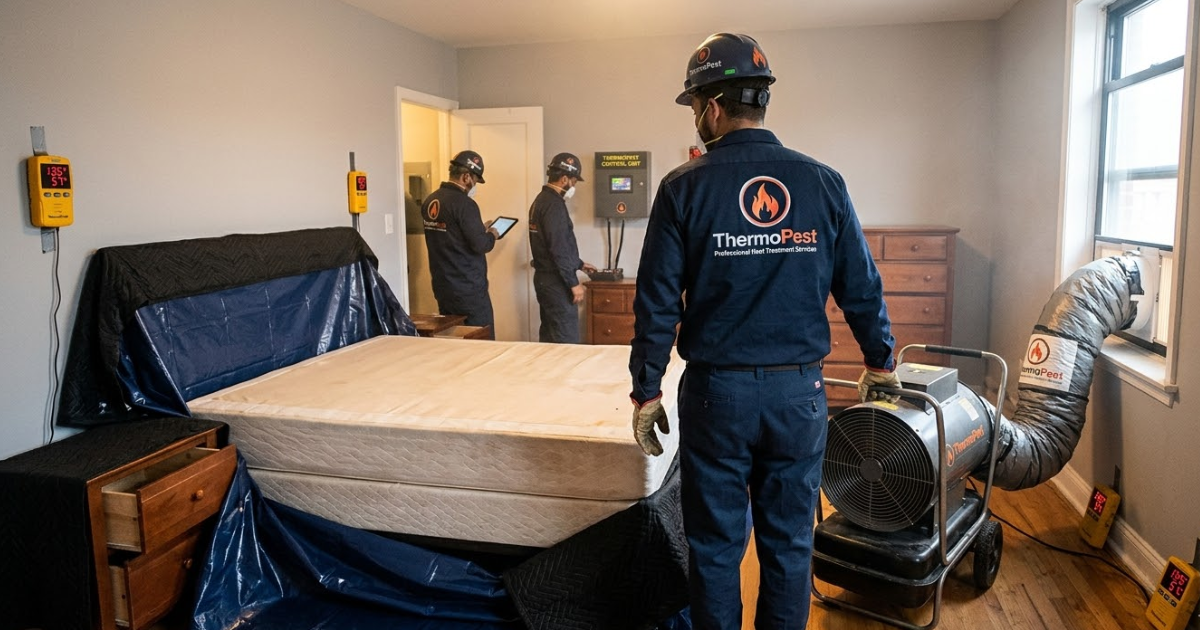
Heat treatment approaches bed bug eradication differently. Instead of targeting individual surfaces, professional heating equipment raises the temperature (between approximately 49°C and 60°C) of the entire room to levels that are lethal to bed bug eggs, nymphs, and adult bed bugs. Once the room starts to heat up and it spreads around, there is nowhere to hide. It doesn’t matter if they’ve made a home in your mattresses, furniture, or carpets, even in structural gaps. The heat will get to them and kill them, no matter the stage of their lifecycle they have reached.
Why Heat Treatment Avoids the Resistance Problem
As the treatment relies on temperature rather than chemicals, bed bugs cannot develop resistance to heat treatment. This is one reason thermal pest control has become increasingly popular for bed bug infestations in cities such as London.
The Main Differences Between Heat and Chemical Treatments
Although both methods can be effective, there are several important differences between them.
Chemical treatments
- Usually requires multiple visits
- Rely on bed bugs contacting treated surfaces
- May take several weeks to fully eliminate an infestation
Heat treatments
- Can eliminate infestations in a single treatment
- Kill bed bugs at all life stages simultaneously
- Penetrate areas where chemical products may not reach
The above differences mean that heat treatment is often used for severe infestations or situations requiring rapid eradication, such as in rental properties or hotels.
Specialist Bed Bug Heat Treatment in London
Because thermal pest control requires specialised equipment and temperature monitoring, it is typically carried out by companies that focus specifically on heat-based pest control methods. In London, ThermoPest specialises in bed bug heat treatment using industrial heating equipment designed to safely raise room temperatures to those lethal levels.
For this type of treatment, you should expect to pay anywhere from £950. The final quote will depend on the size of your property, but the best companies will usually offer a warranty as part of any qualifying treatment, for additional reassurance that your money is being well spent.
For anyone looking to remain eco-conscious, this lower-chemical approach to bed bug control is ideal. Click here to learn more about ThermoPest’s bed bug heat treatment services.
Final Thoughts: Which Bed Bug Treatment Is Better?
Both chemical and heat treatments can be effective when applied correctly by professional pest control technicians. However, because heat treatment eliminates bed bugs at every stage of their lifecycle simultaneously, it is often considered one of the most reliable methods for severe infestations. For homeowners looking for a treatment designed to eliminate infestations quickly and thoroughly, heat treatment is frequently recommended.