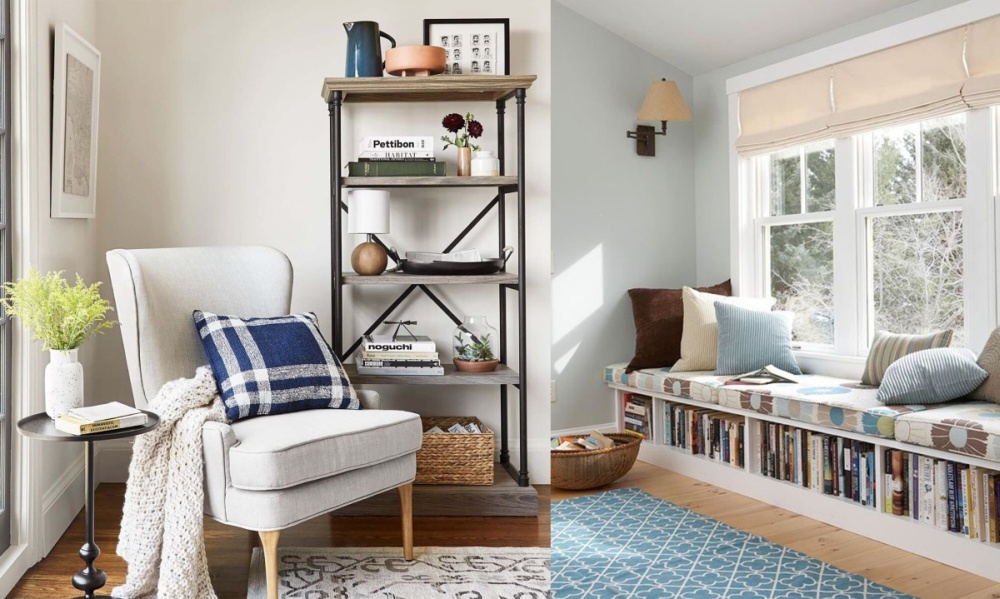
A good reading nook isn’t something you stumble into by accident. It’s built slowly, until you suddenly realise that you’ve been sitting there for an hour longer than planned, ignoring texts and promising yourself you’ll do the dishes after one more chapter.
The best part is that it doesn’t need to be big or elaborate. It just needs to feel separate enough from the rest of your house that everything else fades into the background.
So, if you’ve been eyeing that awkward corner, wondering what to do with it, keep reading to turn it into something brilliant.
Start with the Location
The first rule of building a reading nook is simple: pick a spot where you can actually hear yourself think.
There’s no point settling into a gripping chapter if the washing machine is rattling through the wall or someone is practising the drums like they’re auditioning for a tour.
So, look for somewhere tucked away. Maybe it’s that oddly shaped alcove you’ve never quite known what to do with, or a forgotten corner that’s been collecting dust.
If you can manage it, set up your reading nook near a window. Natural light will save you from squinting at the page, and it’s far easier on your eyes during longer reading sessions.
Plus, there’s something calming about glancing up to see the world carrying on outside while you’re perfectly content to stay put.
Choose Your Carpet
Now that you’ve chosen your spot, it’s time to think about what’s underfoot. Your carpet will set the tone for the whole nook, and it’s one of those details you’ll notice immediately if it isn’t right.
Generally speaking, you want something soft enough that you can sit on for hours without your legs going numb.
Wool carpets are brilliant because they’re durable and have that slightly luxurious feel, while shag rugs are plush and make you feel as if you’ve stepped on a cloud. So, these two options are a good starting point.
Think about the carpet’s size, too. Go for a rug that’s slightly bigger than your chair or seating area to properly define the space.
To avoid replacing it every few years, stick with neutral tones or subtle patterns that won’t date or clash with whatever else you’ve got in the room.
And here’s the bit most people forget: think about upkeep. If you’re in the UK and life gets busy, calling in carpet cleaning help every now and then can keep your rug looking fresh without you wrestling a rental machine.
Sort Your Seating
Where you sit matters more than anything else. If it’s not comfortable, you won’t use your nook, no matter how good it looks.
But that doesn’t mean you have to go for the fanciest armchair. It’s all about finding what feels right.
Bean bags are brilliant if you like to sink in and shift around, and they’re light enough that you can drag them elsewhere when you fancy a change.
Floor cushions work beautifully for that laid-back vibe. They’re easy to rearrange, stack up, or swap out entirely.
And if you’re more traditional, a compact armchair will give you back support and somewhere to curl up without feeling like you’re fighting gravity.
Whatever you choose, pile on the cushions. Mix textures, throw in a few with memory foam or feather filling, and don’t be afraid to overdo it slightly.
Just make sure to pick colours that work with your carpet and the rest of the decor, so everything feels cohesive rather than randomly thrown together.
Get the Lighting Right
Lighting can make or break your reading nook, and it’s worth putting thought into it instead of just clicking on the ceiling light and hoping for the best.
You want something warm and soft—the kind of light that makes you feel relaxed. Floor lamps are ideal because they cast a nice, even glow without being harsh, and they’re easy to position.
Want a more whimsical option? Drape string lights around the space to make it cosier and more personal.
If you’re serious about late-night reading, get yourself a reading lamp. Position it next to your seat so the light falls on your book, not your eyes.
In any case, opt for warm white or yellow-toned bulbs; they’re easier on the eyes and mimic natural daylight.
And if you want to take it up a notch, dimmer switches are brilliant for adjusting brightness depending on your mood.
Add Your Personal Touches
This is where your nook stops being just another corner and starts feeling like it’s actually yours. Personal touches don’t need to be fancy or complicated. They just need to mean something to you.
To personalise the space, throw in a couple of framed photos, a print of your favourite artwork, or a little shelf with book-themed bits that make you smile. You can add quirky bookends or a quote from an author you love.
Plants work brilliantly, too. A bit of greenery makes any space feel more alive. And a soft throw blanket is essential for when you’re properly settled in with no intention of moving.
The goal is to make the space feel unmistakably yours, not like a catalogue photo. So, don’t overthink it and just add things that make you happy.
Keep Your Books Within Reach
There’s nothing more annoying than getting comfortable, finishing your book, and having to haul yourself up to grab another one. This is why you need to keep your reading material close but organised.
Small shelves are perfect if you’ve got wall space. Mount a few at different heights with covers facing out, and you’ve got a functional storage solution that looks intentional.
If shelves aren’t an option, a book cart is a great alternative. You can roll it around and move your collection whenever you fancy.
For a more casual look, baskets or decorative boxes do the job nicely. They keep everything tidy and stylish.
Whatever system you choose, rotate your books every now and then. It’ll keep things fresh and remind you of all the amazing reads you’ve been meaning to get around to.
Experiment with Scents
This might sound like an unnecessary extra, but adding a bit of fragrance to your reading nook can completely transform your experience.
Lavender is the classic choice, since it’s calming and makes the space feel peaceful. Sandalwood works beautifully, too, especially for longer reading sessions when you need something to help you focus.
You can use candles, essential oil diffusers, or incense, based on your mood. Diffusers give you control over the strength, candles add a dynamic layer to the room, and incense has that slow, meditative release.
Don’t go overboard, though. You want a hint of fragrance that enhances the space, not an overwhelming scent that makes your eyes water.
Conclusion
You now know everything you need to turn an underused corner into a proper reading nook, the kind where hours disappear, and you emerge blinking, wondering where the afternoon went.
So, pick your corner, grab a cushion, and start personalising your space. Your next favourite book is waiting.