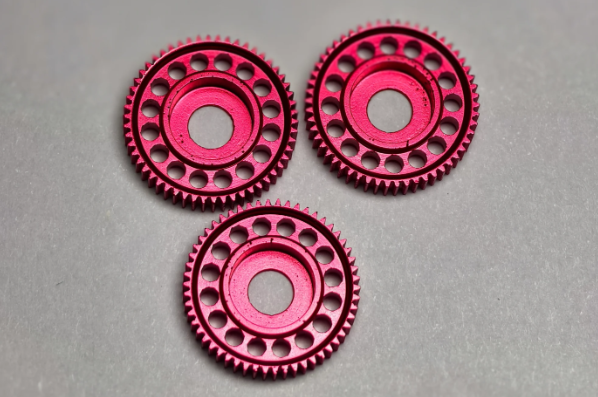
In 2023, a consumer electronics launch stalled 6 weeks costing $340,000 because specification ambiguity created color mismatch. The CNC-machined enclosures were dimensionally perfect—tolerances held ±0.05mm, threads assembled smoothly, surface finish measured Ra 1.6μm. But the “matte black anodize” specification lacked critical details: no alloy certification, no color standard reference, no sealing method, no thickness range.
Result: Parts appeared charcoal gray under showroom LED lighting instead of true black. Marketing rejected 2,400 units. The machining shop blamed anodizing. The anodizer blamed alloy variation. Root cause: incomplete specification enabling interpretation differences across supply chain.
Anodized aluminum delivers exceptional corrosion resistance, surface hardness, and aesthetic versatility—but specification precision determines whether parts meet expectations or require expensive rework. This guide uses February 2026 industry data, ASTM/MIL standards, and specification frameworks preventing costly mistakes.
What Anodized Aluminum Is and Why Specification Matters
Anodizing is electrochemical process converting aluminum surface into aluminum oxide (Al₂O₃) through controlled oxidation in acid electrolyte bath. Unlike paint or plating, anodized coating integrates with base metal—it won’t peel, chip, or flake.
Critical applications: Aerospace components (corrosion resistance), consumer electronics (cosmetic finish + durability), medical devices (biocompatibility + cleanability), automotive trim (weathering resistance), architectural systems (UV stability).
Standards governing anodizing: ASTM B580 (anodic oxide coatings), MIL-A-8625 (military specification), AMS 2470 (aerospace chromic acid), AMS 2471 (sulfuric acid Type II), AMS 2472 (hardcoat Type III).
10 Critical Specification Mistakes and Prevention
Mistake 1: Not Specifying Anodizing Type
Problem: “Anodized” without type specification creates confusion. Type II (decorative/protective) differs fundamentally from Type III (hardcoat) in thickness, hardness, appearance, and dimensional impact.
Type II vs Type III comparison:
| Characteristic | Type II (Sulfuric Acid) | Type III (Hardcoat) |
|---|---|---|
| Coating thickness | 10-25 μm (0.0004-0.001″) | 25-100 μm (0.001-0.004″) |
| Surface hardness | 200-400 HV | 400-600 HV |
| Appearance | Bright, colorable | Darker, less vibrant colors |
| Wear resistance | Moderate | Excellent (5-10× Type II) |
| Cost | Baseline | +40-80% premium |
| Dimensional impact | Minimal | Significant on tight tolerances |
| Applications | Cosmetic, light duty | Wear surfaces, harsh environments |
Correct specification: “Type III hardcoat anodize per MIL-A-8625, Class 1, 50 ± 10 μm thickness, natural (undyed).”
Mistake 2: Ignoring Alloy Impact on Appearance
Not all aluminum alloys anodize identically. Alloy chemistry—particularly copper, silicon, and magnesium content—dramatically affects color uniformity and dye absorption.
Alloy anodizing characteristics:
| Alloy | Anodizability | Color Consistency | Typical Color | Notes |
|---|---|---|---|---|
| 6061-T6 | Excellent | Very consistent | Light gray (natural) | Industry standard, excellent dyeing |
| 6063-T5 | Excellent | Very consistent | Nearly white (natural) | Architectural extrusions |
| 7075-T6 | Moderate | Variable | Gray/bronze tones | Copper content causes color variation |
| 2024-T3 | Poor | Highly variable | Mottled appearance | High copper, avoid for cosmetic |
| 5052-H32 | Good | Consistent | Light gray | Marine applications |
Case study: Medical device housings (September 2025)
Initial spec: “6061-T6 aluminum, black anodized” Problem: Supplier substituted 6063-T5 (cost savings), causing subtle color difference vs existing inventory Impact: Customer rejected batch, $28,400 rework Solution: Specify “6061-T6 per ASTM B209, material certification required, no substitutions without approval”
Mistake 3: Forgetting Dimensional Changes From Coating Growth
Anodizing adds thickness that grows approximately 50% inward (consuming base metal) and 50% outward. Type II (20μm) changes dimensions ±10μm. Type III (60μm) changes ±30μm.
Critical impacts:
- Internal threads may bind (reduce clearance)
- Tight-tolerance bores may undersized
- Mating surfaces may interfere
- Press fits may tighten excessively
Prevention strategies:
- Add 0.001-0.002″ (25-50μm) to internal diameters before anodizing
- Subtract from external diameters on tight-fit features
- Mask threads if post-anodizing tapping impractical
- Specify “anodize per drawing, dimensions shown are post-anodize finished dimensions”
Example: Bearing bore specified Ø15.00mm ±0.01mm. Type III anodizing (50μm) grows 25μm inward. Machine bore to Ø15.05mm before anodizing for final Ø15.00mm dimension.
Mistake 4: Overlooking Surface Preparation Requirements
Anodizing magnifies rather than hides machining defects. Tool marks, scratches, and inconsistent surface finish become more visible, especially with dark dyes.
Surface finish impact on anodized appearance:
- Ra 3.2-6.3 μm: Visible machining marks, suitable industrial parts
- Ra 1.6-3.2 μm: Light texture visible, consumer products acceptable
- Ra 0.4-1.6 μm: Smooth cosmetic finish, premium electronics
- Ra <0.4 μm: Mirror finish achievable, high-end applications
Specification best practice: “Machine to Ra 1.6 μm maximum, bead blast with 120-grit aluminum oxide before anodizing, break all sharp edges 0.2-0.5mm.”
Mistake 5: Not Defining Color Standards and Acceptable Variation
“Black anodized” specification enables interpretation ranging from charcoal gray to deep black. Alloy chemistry, dye concentration, immersion time, and sealing method all affect final color.
Color specification methods:
- Pantone/RAL reference with tolerance (e.g., “approximate Pantone Black 6 C, ΔE ≤2.0”)
- Master sample approval (physical part serving as color standard)
- Spectrophotometer measurement (Lab* color space values)
- Industry color standards (Aluminum Anodizers Council color charts)
Color consistency factors:
- Single alloy source (different mills = different chemistry = color variation)
- Batch anodizing (process all parts in single tank run)
- Documented dye lot tracking
- Sealed master sample for comparison
Mistake 6: Ignoring Sealing Method Impact
After anodizing and dyeing, porous oxide layer requires sealing preventing corrosion and color degradation. Sealing method significantly impacts performance.
Sealing methods comparison:
| Method | Process | Corrosion Resistance | Color Retention | Cost | Applications |
|---|---|---|---|---|---|
| Hot water | Boiling DI water, 15-30 min | Good (200-500 hrs salt spray) | Good | Low | General industrial |
| Nickel acetate | Nickel acetate bath, 15-30 min | Excellent (500-1000+ hrs) | Excellent | Moderate | Outdoor, marine |
| Cold sealing | Room temp sealant, 10-20 min | Very good (400-800 hrs) | Very good | Moderate | High-throughput |
| Teflon impregnation | PTFE dispersion | Excellent + low friction | Excellent | High | Wear surfaces |
Specification: “Seal per MIL-A-8625, nickel acetate method, minimum 500 hours salt spray per ASTM B117.”
Mistake 7: Skipping Performance Testing Requirements
Cosmetically acceptable parts may fail performance testing. Define measurable acceptance criteria.
Essential tests by application:
- Corrosion resistance: ASTM B117 salt spray (hours to first corrosion)
- Coating thickness: ASTM B487 eddy current, ASTM B137 microscopy
- Abrasion resistance: ASTM B680 abrasive wear, Taber abraser
- Adhesion: ASTM B571 tape test (no coating removal allowed)
- Color stability: ASTM G155 accelerated weathering (ΔE measurement)
- Sealing quality: ASTM B136 admittance test, ASTM B680 loss of mass
Aerospace example: “Type III hardcoat per AMS 2469, 50-75 μm thickness verified per ASTM B487, minimum 500 hours salt spray per ASTM B117, coating adhesion per ASTM B571 with zero failures.”
Mistake 8: Choosing Price Over Process Control
Anodizing quality depends on bath chemistry maintenance, temperature control (±2°C critical), voltage regulation, and quality documentation—areas where budget providers cut costs.
Quality indicators:
- ISO 9001/AS9100/NADCAP certification (aerospace)
- Documented bath monitoring (chemistry, temperature, pH)
- Thickness measurement on every batch
- Color measurement with spectrophotometer
- Environmental compliance (wastewater treatment)
Companies like FastPreci coordinate machining and finishing as integrated process, ensuring anodizing specifications align with tolerances from design phase—critical coordination preventing tolerance stack-up issues and finish incompatibilities that emerge when machining and anodizing operate independently without communication.
Mistake 9: Overcomplicating Geometry Without Considering Coverage
Deep recesses, blind holes, and high aspect ratio features create uneven current distribution causing coating thickness variation.
Design guidelines for uniform anodizing:
- Minimize blind holes (through-holes preferable)
- Avoid sharp internal corners (0.5mm minimum radius)
- Limit depth-to-width ratios <5:1 for pockets
- Provide drainage holes preventing trapped solutions
- Consider racking/fixturing access for electrical contact
Mistake 10: Failing to Align Finish With Functional Requirements
Anodized aluminum isn’t always optimal choice. Evaluate alternatives when:
- Electrical conductivity required (anodizing is insulator)
- Extreme wear (consider PVD coatings)
- Heavy structural loads (anodizing slightly reduces fatigue strength)
- Welding/soldering needed post-finish (anodizing prevents bonding)
Complete Specification Template
Correct anodized aluminum specification:
- Alloy: 6061-T6 per ASTM B209, material certification required
- Surface preparation: Machine to Ra 1.6 μm maximum, bead blast 120-grit Al₂O₃
- Anodizing type: Type II sulfuric acid per MIL-A-8625, Class 1
- Coating thickness: 20 ± 5 μm, verify per ASTM B487 eddy current
- Color: Black dye, approximate Pantone Black 6 C, ΔE ≤2.0 vs approved master sample
- Sealing: Nickel acetate seal per MIL-A-8625
- Performance: Minimum 500 hours salt spray per ASTM B117, zero coating adhesion failures per ASTM B571
- Dimensional notes: Dimensions shown are post-anodize finished dimensions
- Inspection: Provide coating thickness report and material certification with shipment
FAQs: Anodized Aluminum Specification
What is anodized aluminum?
Aluminum with electrochemically grown aluminum oxide surface layer (10-100 μm thick) providing corrosion resistance, surface hardness, and coloration capability. Unlike paint/plating, anodizing integrates with base metal and won’t peel. Governed by ASTM B580, MIL-A-8625 standards. Used extensively in aerospace, electronics, automotive, architectural applications.
What’s the difference between Type II and Type III anodizing?
Type II (decorative): 10-25 μm coating, 200-400 HV hardness, excellent color options, moderate wear resistance, baseline cost. Type III (hardcoat): 25-100 μm coating, 400-600 HV hardness, limited colors, excellent wear resistance (5-10× Type II), costs 40-80% more. Choose Type II for cosmetic/light-duty, Type III for wear surfaces/harsh environments.
Does anodizing change part dimensions?
Yes. Coating grows ~50% inward (consuming base aluminum) and ~50% outward. Type II (20 μm typical) changes dimensions ±10 μm. Type III (60 μm) changes ±30 μm. Critical for tight-tolerance features—adjust dimensions before anodizing or mask features requiring precise sizing. Threads may bind; bores may undersize.
What aluminum alloys anodize best?
6061-T6 and 6063-T5 anodize excellently with consistent color, excellent dye absorption. 5052 anodizes well for marine applications. 7075 acceptable but copper content causes color variation. 2024 poor due to high copper (mottled appearance). Specify single alloy source for color consistency across production batches.
How do you specify anodized aluminum color?
Reference Pantone/RAL color with tolerance (ΔE ≤2.0), provide master sample for approval, specify spectrophotometer Lab* values, or reference Aluminum Anodizers Council standards. Specify alloy precisely (chemistry affects color), require single-source material, and define acceptable variation. Natural (clear) anodize produces light gray appearance varying by alloy.
How long does anodized aluminum last?
Depends on coating type, sealing quality, and environment. Type II with proper sealing: 5-15 years outdoor architectural. Type III hardcoat: 15-30+ years harsh environments. Salt spray testing indicates durability: well-sealed Type II achieves 500+ hours, Type III exceeds 1,000 hours per ASTM B117. UV-stable dyes prevent fading in sunlight exposure applications.
Specification Precision Prevents Production Problems
Anodized aluminum delivers exceptional performance when specified completely—ambiguous specifications create interpretation gaps causing rework, delays, and cost overruns. Define anodizing type, alloy, thickness, color standard, sealing method, and testing requirements explicitly in drawings and purchase orders.
Coordinate with machining partners like FastPreci ensuring anodizing specifications integrate with tolerances from design phase, preventing issues emerging when finishing operates independently from machining without specification alignment.
What anodizing specification challenges are preventing confident part approval—color consistency, dimensional control, or performance validation?