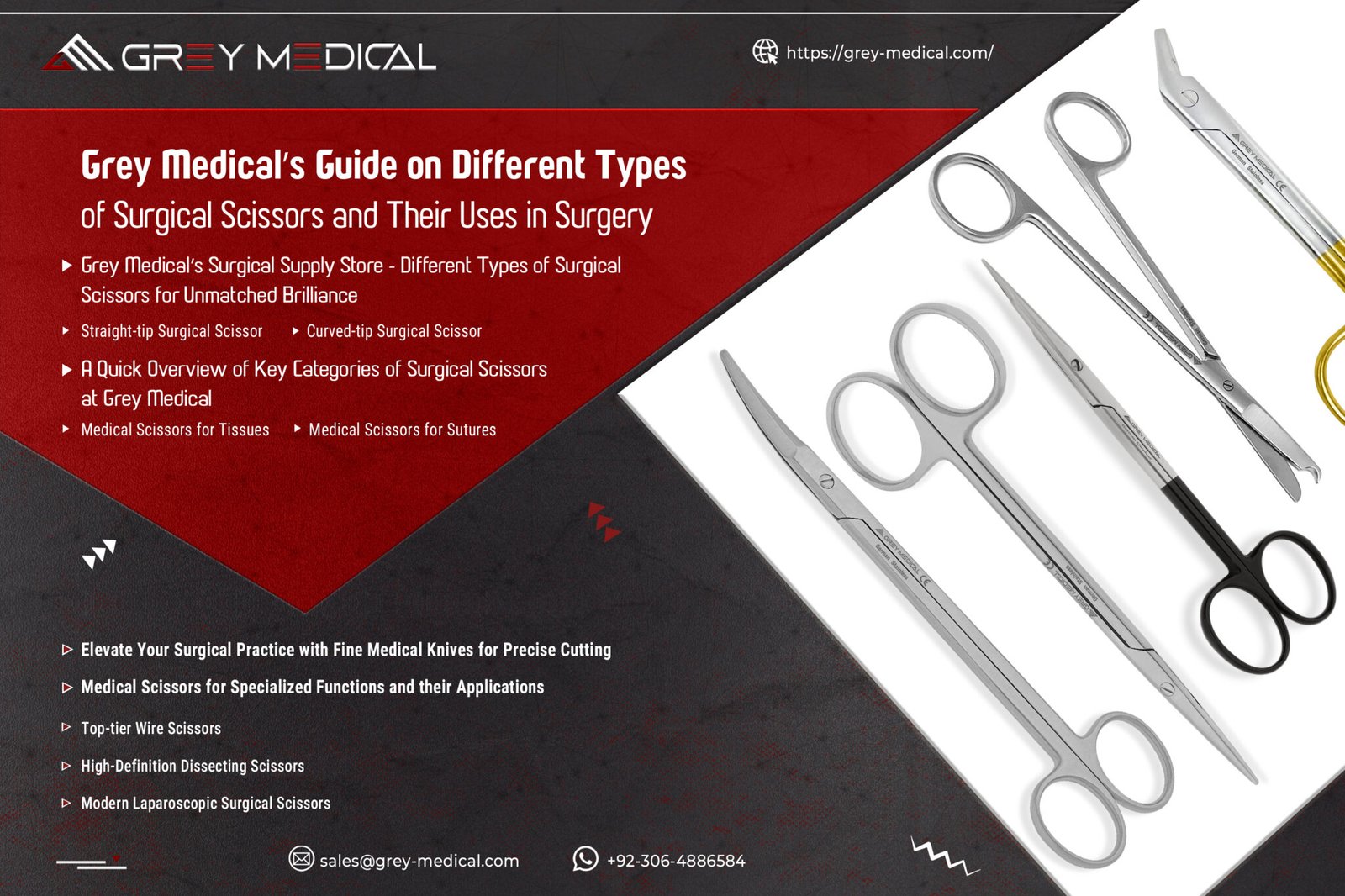
Suture removal is a common yet extremely delicate procedure. To perform this process carefully and with minimal pain, surgeons rely on a specialized instrument known as suture removal scissors. These are also referred to as suture cutting scissors, suture removal scissors with hook, Spencer stitch scissors, and Littauer stitch scissors. Designed with precision, they ensure that healed tissues are not harmed during stitch removal. Many professionals also trust reliable brands like Grey Medical cutting sutures for safe and accurate performance.
Due to high search volumes such as suture removal kit (8,100), suture cutting scissor, and surgical scissors, it is clear that there is a strong demand for professional instruments that guarantee a safe and efficient post-surgery process.
In this guide, we will discuss in detail what suture removal scissors are, how they differ from regular scissors, and what essential features surgeons should look for when choosing the right tool.A detailed discussion on what suture removal scissors are, and what separates these scissors from regular scissors will be made. A list containing necessary features will also be included.
Find high quality scissors here:
What Are Suture Removal Scissors?
Suture removal scissors are surgical scissors intended for cutting and removing sutures once the wound has healed sufficiently. These scissors are very useful in:
- General surgery
- Plastic
- Emergency departments
- Veterinary
The uniqueness of these tools is based on the presence of a hook-like tip that raises the suture above the skin before it cuts. This helps to curb accidents and infections.
Suture removal scissors are usually packaged with suture removal kits as they are safer and more precise compared to regular scissors. Their light and angled design enables surgeons to remove sutures swiftly and with ease.
The instrument design for removal scissors aims at optimal precision and safety. The instrument contains the following components:
Hooked Tip
The small hook at the end goes under the suture and pulls it away from the skin. It reduces trauma and prevents the scalpel blade from scraping against the skin.
Angled or Curved Blades
It also curves slightly, offering better visibility and easier access to sutures from various directions.
Sharp Cutting Edge
A sharp cutting edge will result in clean cuts on the suture without unnecessary pulling.
Ergonomic Handles
These handles are designed for comfort and thus reduce fatigue associated with removing several stitches.
Purpose_in_Surgery
The main objective is removing these stitches cleanly, quickly, and safely without causing any harm or discomfort to the patient.
How they Differ from Regular Scissors
Both are employed within medical facilities, but there exist several distinctions between suture removal scissors and regular surgical scissors:
1. Specialized Hook
Common scissors do not have a hook that allows people to lift threads. A hook is what makes it easy and safe to remove a stitch.
2. Reduced Trauma
Also, regular scissors may end up pinching or tearing skin, mostly when doing intricate cuts. Suture scissors eliminate such problems.
3. Purpose Specific Edge
As opposed to general surgery scissors used for cutting tissues or materials, suture scissors have specific functions for cutting sutures.
4. Improved Patient Comfort
A clean and accurate cut can decrease pain and eliminate complications.
Importance of Using Quality Suture Removal Scissors
It is very important to have high-quality instruments for maintaining safety and optimal results.
- CAlls TO Superior-Quality Sc
- Sharpness helps achieve smooth cutting
- No pulling or dragging
- Minimizes
- Decreases risk associated with reopening wounds
- offers greater stability and control
Professional tools like Spencer Stitch Scissors and Littauer scissors are preferred among surgeons all over the world.
Peri-Stomal Site Leak Test
Both technique and instrument quality have roles to play with regard to safety while removing sutures.
Appropriate suture removal scissors:
- To aid in isolating the suture from the skin
- Enable fast cutting
- Prevent tissue irritation
- Lower the chances of infection
Removing a single stitch will be safer and more pleasant if done with appropriate scissors.
Reducing Patient Discomfort
Patients fear removal of sutures, but with specific scissors, it becomes an almost painless process.
They relieve discomfort because:
• Preventing
• Avoiding skin pin
• Limiting pressure surrounding the area of repair
• Creating a smooth cutting motion
It also has a hooked tip. Its usefulness extends to delicate spots on the skin, such as the area on your face.
Advances in Post-Operative
Better instruments translate to better outcomes. Quality suture removal scissors assist with:
• Ensure the integrity of the wound
• Prevent
• Scar tissue
• Aid faster recovery
Looking at post-operative procedures, it should be remembered that no detail is insignificant, and particularly the equipment required for the ultimate stage of recovery.
Using Suture Removal Scissors Effectively
How to Use Suture
It is very important that the removal of sutures be done using proper technique.
- Debriding and Preparing Wound
- Use antiseptic solution to clean.
- Evaluate healing and look for evidence of infection
- All sutures should
- Position the patient comfortably
- It also helps prevent opening up the wound again.
- Effective Cutting Methods
- Cutting
- Put the hook under the suture
- Lift it gently away from your skin
- Unfold so it does not obstruct the eyes
- Remove the suture using sterile forceps
Healthcare Provider Safety Information
• Scissors should be sterilized
• Do not cut through knots.
• Look for signs of infection
• Do not continue with pain in the patient
• Properly dispose of sutures via a sharps container
Cleaning and Sterilization: Best Practices
To be healthy and have tools that will last, clean them properly.
- Rinse scissors after use
- Clean with enzymatic or medical instrument detergent
- Scrub gently with a soft brush
- Rinse with distilled water.
- Need to be completely
- Common pitfalls to be avoided while sterilizing
- Do not use any chemicals that can harm steel.
- Do not leave scissors with wet blades, as they can rust.
- Do not overcrowd the autoclave tray
- Verify joints are fully open before sterilization
Maintaining your instruments will extend the life span and make sure that all procedures remain safe.