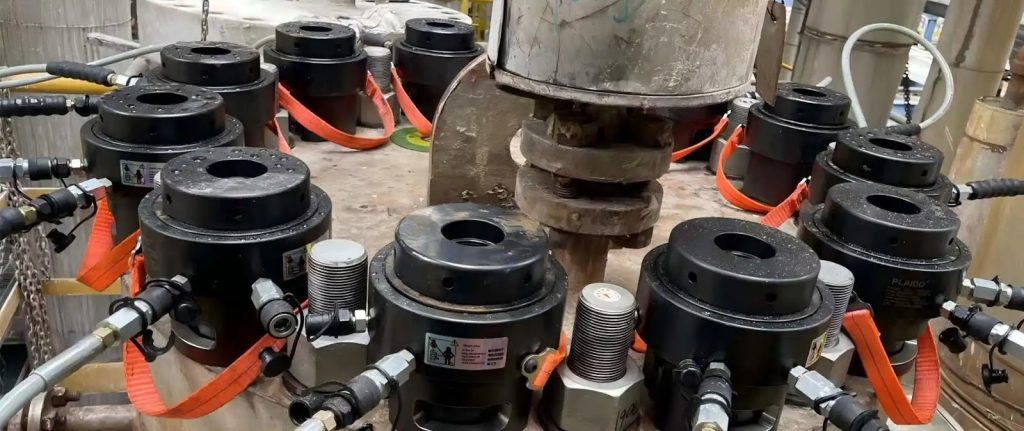
In modern industrial assembly work, achieving uniform and accurate bolt tightening is crucial for structural integrity, safety, and long-term performance. Traditional torque-based methods have limitations, especially with large fasteners or critical joints in sectors like oil & gas, petrochemical, power generation, and heavy engineering. This is where Hydraulic Bolt Tensioners have revolutionized bolting processes — offering high precision, repeatable results, and faster operations.
Hydraulic bolt tensioning tools have become indispensable in heavy industry. They allow technicians to apply controlled tensile force directly to the bolt, guaranteeing that each fastener achieves the exact preload required. In this comprehensive article, we will explore what these tools are, how they work, their key components, applications, advantages, maintenance tips, and how to choose the right system for your needs.
What Are Hydraulic Bolt Tensioners and Why They Matter
Hydraulic Bolt Tensioners are specialized tools designed to apply high-precision axial tension to bolts and studs. Unlike torque wrenches that depend on rotational force, these tensioners use hydraulic pressure to elongate a bolt before the nut is tightened down, ensuring an accurate preload.
Ekxia’s range of tensioners covers both single-stage and multi-stage designs, making them suitable for various industrial applications with load capacities often ranging from approximately 500 kN up to 2000 kN or more. This precision reduction in variability helps prevent leaks, structural failures, and costly machinery downtime.
How Hydraulic Bolt Tensioners Work: The Science Behind the Tool
Hydraulic bolt tensioning is fundamentally about controlled bolt elongation. Here’s how the process typically works:
- A hydraulic cylinder is placed over the bolt or stud.
- High-pressure hydraulic fluid is pumped into the cylinder.
- The hydraulic tensioner stretches the bolt axially, creating a gap between the nut and surface.
- While the bolt is under tension, the nut is threaded down and secured.
- Once pressure is released, the bolt retains the preload through elastic deformation.
This method eliminates torsional forces and friction losses common in traditional torque tightening, resulting in much higher accuracy and uniformity of clamping force.
Key Components of Hydraulic Tensioning Systems
Hydraulic tensioning systems are built from several critical parts:
- Hydraulic Cylinder: Generates force using fluid pressure and directly stretches the bolt.
- Load Cell / Bridge: Ensures even force application across multiple bolts.
- High-Pressure Pump: Provides hydraulic fluid (manual, electric, or pneumatic types).
- Hoses and Fittings: Rated for ultra-high pressures (often up to 1500 bar).
Many systems, like those found in Ekxia’s product catalog, offer modular and interchangeable components, allowing technicians to adapt tensioners to different bolt sizes without changing the entire tool.
Industrial Applications: Where Hydraulic Bolt Tensioners Excel
These tools are commonly used across sectors that demand high reliability and repeatability:
- Oil & Gas and Petrochemical Plants: Tightening flanges on pipelines, pressure vessels, and heat exchangers.
- Power Generation: Securing turbine and generator flanges, boiler units, and large mechanical assemblies.
- Manufacturing and Heavy Machinery: Ensuring consistent preload on structural bolts and critical fasteners.
- Wind Turbine Construction and Maintenance: Mounting tower bolts and blade hub flanges where precision is paramount.
Hydraulic bolt tensioning enables simultaneous or sequential tightening of multiple studs, greatly improving efficiency on large flange joints where uniform gasket compression is essential.
Benefits Over Traditional Torque Tightening Methods
Hydraulic tensioning offers several major advantages:
- Improved Accuracy: Load applied directly to the bolt eliminates variances from friction.
- Speed and Efficiency: Faster operation compared to manual torque wrenches, especially on multiple fasteners.
- Repeatability: Multiple bolts can be tensioned in parallel using a single pump.
- Reduced Bolt Fatigue: Axial tensioning reduces internal stresses that might occur during torsional tightening.
- Safety: Controlled tensioning reduces chances of bolt or equipment damage.
These benefits make hydraulic tensioners ideal for critical joints where failure or leakage could have significant safety or financial consequences.
Best Practices for Maintenance and Safe Use
Proper handling and maintenance are essential for both tool longevity and operator safety:
- Routine Inspection: Check hoses and seals for wear, cracks, or leaks before each use.
- Calibration: Ensure load cells and pressure gauges are calibrated regularly.
- Clean Threads: Debris or corrosion on studs or nuts can hinder proper tensioning.
- Follow Pressure Limits: Work within manufacturer-specified pressures to avoid overloading the system.
- Training: Operators should be trained in correct setup and tensioning sequences to avoid uneven preload or joint distortion.
Adhering to these practices reduces downtime and extends the life of both the tensioning equipment and the assemblies they service.
Conclusion: Precision, Performance, and Reliability with Hydraulic Bolt Tensioners
In industries where joint integrity can be the difference between smooth operation and costly failure, Hydraulic Bolt Tensioners are a proven solution for achieving precise, uniform, and reliable bolt preload. From the engineers designing pipeline flanges to technicians maintaining large vessels and machinery, these tensioners provide unmatched control and efficiency. With quality offerings from suppliers like Ekxia, engineers have access to tools that deliver accurate results across diverse applications — ultimately enhancing safety, performance, and productivity on every bolting project. For more information, read more.