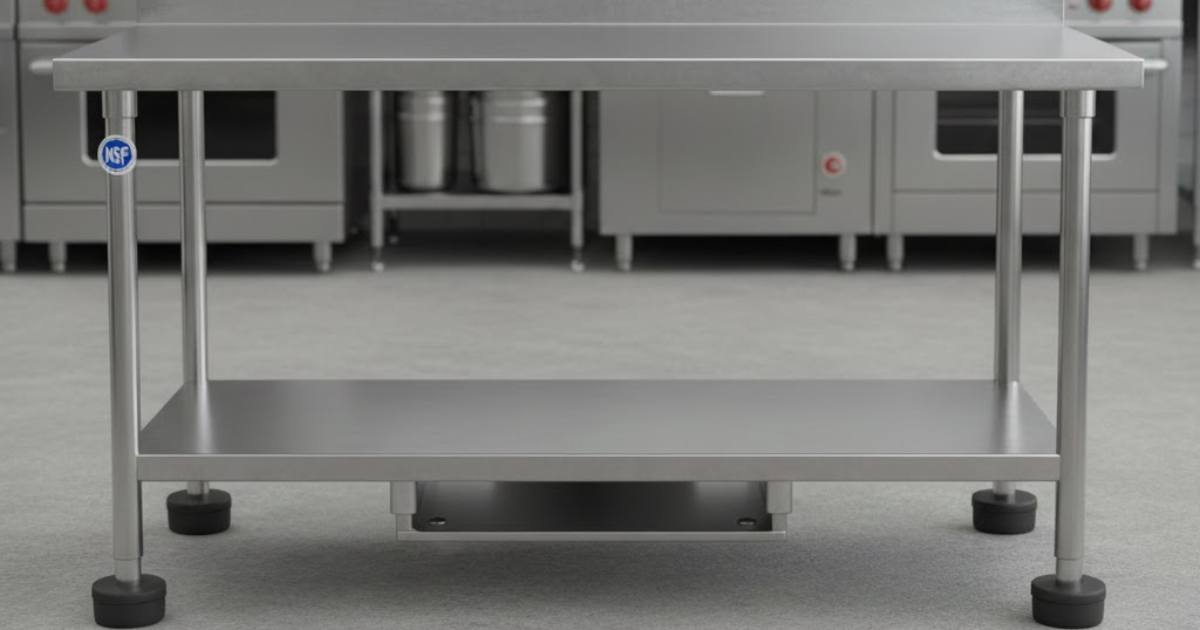
A heavy duty stainless steel table serves as the foundation of any busy kitchen, workshop, or workspace. It supports heavy loads, resists wear, and maintains a clean surface for daily tasks. Choosing the right table helps create a safer, more efficient, and longer-lasting work area.
The right table depends on more than just size or style. Factors such as steel thickness, weight capacity, storage options, and resistance to rust all influence how well the table performs over time. By understanding these key features, anyone can make a smart investment that meets both practical and professional needs.
Thickness and Gauge of Stainless Steel
The thickness of a stainless steel sheet affects how strong and stable a stainless steel table will feel in daily use. Gauge numbers describe this thickness. A lower gauge means a thicker sheet, which supports heavier loads and resists dents more effectively.
For heavy-duty tables, 14 or 16-gauge stainless steel is common. These gauges measure about 0.075 to 0.063 inches thick. They offer a solid surface suitable for kitchens, workshops, or industrial areas where durability matters most.
Thinner gauges, such as 18 or 20, work better for light-duty settings. They cost less but may flex under heavy equipment or constant pressure. Therefore, buyers should match gauge thickness to the table’s intended workload.
A thicker table also weighs more and may require stronger legs or bracing. However, it provides better long-term value because it resists bending, scratching, and corrosion over time.
Weight Capacity and Load Support
A heavy-duty stainless steel table must support large weights without bending or warping. The table’s weight capacity depends on factors such as top thickness, frame strength, and support design. Thicker steel tops and reinforced beams usually allow higher load limits.
For example, some tables hold over 1,000 pounds across the top and undershelf combined. Others may support less, depending on the material grade and frame construction. Buyers should check both top and undershelf ratings to match their work needs.
The table’s structure also affects how evenly it handles weight. Cross braces and welded joints help distribute pressure across the frame. As a result, the table stays stable under heavy tools or equipment.
It helps to consider what will sit on the table most often. A workshop may need a higher load rating than a kitchen prep area. Selecting a table with a safe margin above the expected weight keeps it steady and long-lasting.
Undershelf Storage Options
An undershelf adds extra space below the main work surface, which helps keep tools and supplies close at hand. It allows workers to store items without cluttering the tabletop, creating a cleaner and safer workspace.
Many heavy duty stainless steel tables include adjustable undershelves. This feature lets users raise or lower the shelf to fit larger containers or small utensils as needed. The flexibility supports different types of work, from food prep to equipment storage.
Some models use solid stainless steel undershelves, while others use wire designs for better airflow. Both styles resist moisture and hold moderate weight, though solid shelves handle heavier loads.
Casters can make tables with undershelves easier to move, which suits kitchens or workshops that need frequent layout changes. In addition, undershelves made from the same steel grade as the tabletop maintain a consistent level of strength and corrosion resistance.
Corrosion and Rust Resistance
A heavy duty stainless steel table must resist rust and corrosion to last in busy work areas. Stainless steel forms a thin oxide layer that protects the surface from moisture and air. This barrier helps stop rust from forming, even under frequent cleaning or exposure to liquids.
Different grades of stainless steel offer different levels of resistance. For example, type 304 handles most indoor uses, while type 430 performs well in dry or light-duty environments. Type 316 contains molybdenum, which gives it extra protection against harsh chemicals or saltwater.
Proper maintenance also affects corrosion resistance. Regular cleaning with mild soap and water helps preserve the protective layer. Harsh cleaners or steel wool can damage the surface and reduce its ability to resist rust.
In food service or laboratory settings, corrosion resistance supports hygiene and long-term performance. A well-chosen stainless steel table maintains its strength, appearance, and function even after years of use.
Ease of Cleaning and Maintenance
A heavy duty stainless steel table should allow quick and simple cleaning. Smooth, non-porous surfaces prevent dirt and liquids from sticking, which helps keep the workspace sanitary. Stainless steel resists rust and stains, so it stays in good condition with basic care.
Regular maintenance keeps the table safe and functional. Wiping it down after each use removes debris that could cause wear over time. For tougher buildup, mild soap and water usually work well without damaging the surface.
Good design also supports easy upkeep. Tables with open frames or minimal seams reduce areas where grease or residue can collect. As a result, cleaning takes less time and effort.
In addition, proper maintenance extends the table’s life. Checking for loose screws or worn edges helps prevent damage before it becomes a problem. This routine care keeps the table ready for daily use in demanding work environments.
Conclusion
A heavy duty stainless steel table offers strength, cleanliness, and long life for both home and professional use. It supports heavy loads and resists corrosion, which makes it a dependable choice for demanding environments.
Buyers should focus on material thickness, weld quality, and weight capacity to match their specific needs. A thicker gauge provides better stability, while smooth welds reduce dirt buildup and make cleaning easier.
It also helps to check features such as adjustable feet, undershelves, or backsplashes for added function. Each feature adds value based on how and where the table will serve.
By comparing design, durability, and ease of maintenance, users can choose a table that offers lasting performance and a clean workspace.