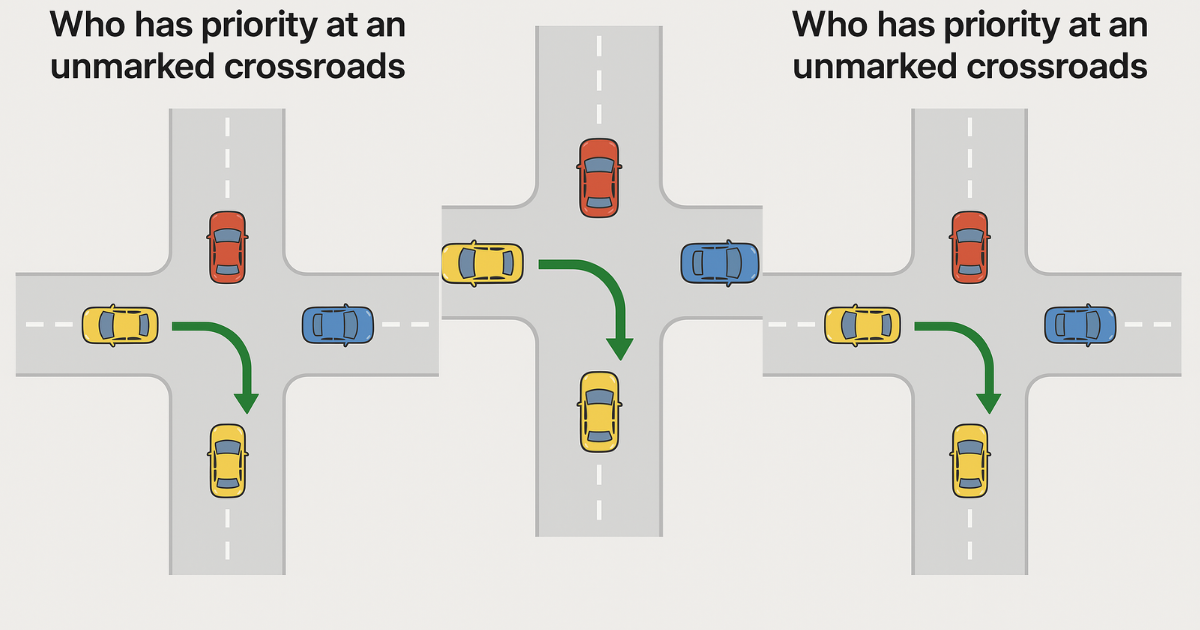
Driving requires not only skill but also a deep understanding of road policies. One situation that often confuses drivers is arriving at an unmarked crossroads, where there are no traffic lights, signs, or road markings to indicate who should go first. Understanding who has priority at an unmarked crossroads is essential for avoiding accidents, reducing misunderstandings, and ensuring safe road navigation.
1. What Is an Unmarked Crossroads?
An unmarked crossroads is an intersection where there are no forestall signs and symptoms, yield signs and symptoms, or visitors lights to control the flow of vehicles. It often appears in rural areas, residential neighborhoods, or newly developed roads before proper signage is installed. Because there are no clear indicators, drivers must rely on road rules and good judgment to decide who moves first.
2. The Basic Rule of Priority
In most countries, the general rule is simple: give way to vehicles approaching from your right. This is based totally on the concept that traffic from the proper has precedence until in any other case indicated. However, laws can vary slightly depending on the country or state, so it’s important to be familiar with local driving regulations.
3. The Role of Road Position and Approach
When approaching an unmarked crossroads, your position and speed matter. Slowing down and scanning both sides for incoming traffic is essential. Even if you technically have priority, approaching cautiously ensures that you have enough time to react to drivers who might not follow the rules.
4. Common Misunderstandings at Unmarked Crossroads
One major issue is that not all drivers know or remember the correct priority rules. Some might assume that the largest or fastest vehicle should go first, while others may mistakenly believe that whoever arrives first has automatic priority. While “first come, first served” may seem logical, it is not the official rule in most places.
5. Pedestrians at Unmarked Crossroads
Pedestrian priority adds another layer of complexity. In many jurisdictions, if a pedestrian is already crossing or about to cross, vehicles must yield to them, even if they are approaching from the left. This means that as a driver, you must be prepared to stop not just for vehicles but also for people on foot.
6. Situations Where Rules Might Differ
Some countries or states have variations in the rules. For example:
- United States: Many states follow the “yield to the vehicle on your right” rule, but some intersections may be governed by “first to arrive” rules.
- United Kingdom: Priority is often determined by who is already on the main road, but at truly equal junctions, you must give way to the right.
- European Union nations: The “priority to the right” rule is popular except road markings indicate in any other case.
Always check your region’s highway code or driver’s handbook for specific guidance.
7. How to Approach Safely
Here are safe driving steps for unmarked crossroads:
- Reduce speed well before reaching the intersection.
- Look both ways for approaching motors, bicycles, or pedestrians.
- Be prepared to stop even if you think you have priority.
- Make eye contact with other drivers when possible to confirm intentions.
- Avoid sudden acceleration until you are positive the path is clear.
8. The Dangers of Assuming Priority
One of the most dangerous mistakes a driver can make is assuming that other drivers know the rules. At unmarked crossroads, some drivers may proceed without slowing down, ignoring the right-hand priority. This can cause collisions, especially if both vehicles enter the intersection at the same time. Defensive driving is always the safest approach.
9. Learning From Real-Life Scenarios
Consider this scenario: Two cars arrive at an unmarked crossroads at the same moment—one from the north, one from the east. According to the priority-to-the-right rule, the car from the east goes first. However, if both drivers hesitate or move forward together, confusion can occur. By understanding the official rules and applying caution, accidents can be avoided.
10. Why This Knowledge Matters for All Drivers
Even if you drive mostly on main roads with clear signage, situations involving unmarked crossroads can happen unexpectedly. Construction work, temporary sign removal, or traveling in unfamiliar areas can put you in this position. Knowing who has priority at an unmarked crossroads not only keeps you safe but also helps maintain smooth traffic flow for everyone.
Conclusion
Unmarked crossroads test a driver’s knowledge, patience, and awareness. The key takeaway is that in most cases, the vehicle approaching from the right has priority, but safety should always come before strict rule-following. Reducing speed, scanning carefully, and being ready to yield—even when you technically have the right of way—are habits that can save lives. By understanding and applying these principles, you contribute to safer roads and prevent unnecessary accidents.