
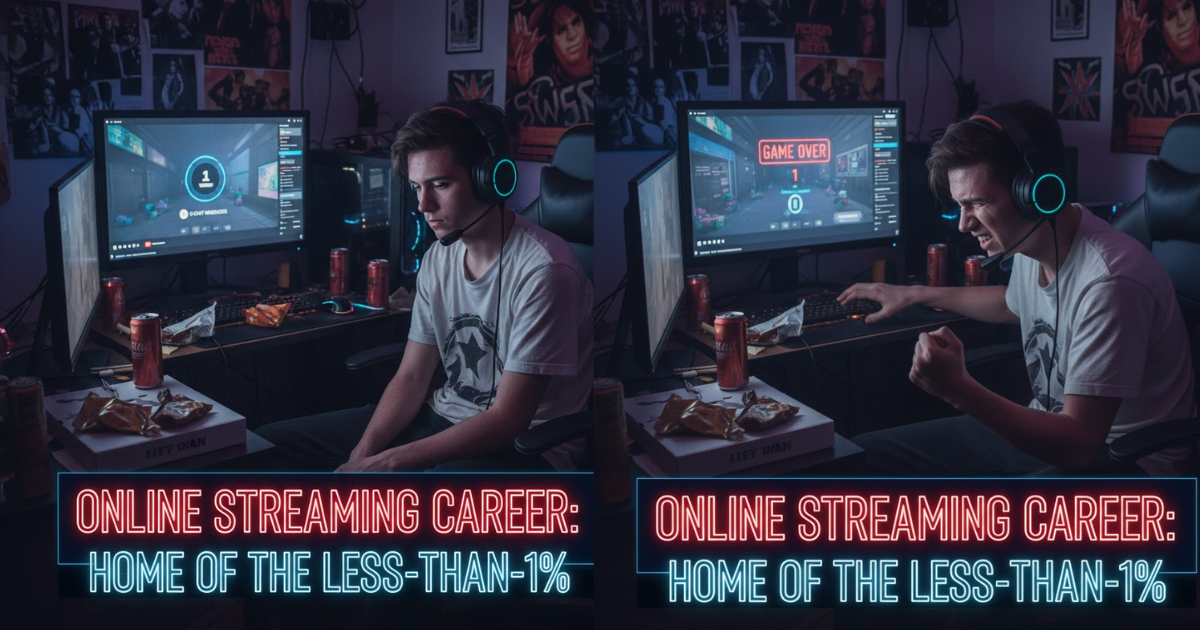
While all careers can seem exclusive in terms of qualifications, experience, and interview chops, some jobs are the stuff of dreams. These are the sportspeople, musicians, and actors who earned the right to occupy the public’s collective mind.
Most people won’t get close to Hollywood or the World Cup Final – even as a fan, given the prices for the upcoming edition. Yet, there’s always a way. Platforms like YouTube and Twitch give fans the chance to pretend – but just how exclusive is a hobby that seemingly anybody can do?
Professional Qualifications
Of course, streaming has a lot in common with presenting on TV. The latter isn’t as ‘elite’ a role as the wages of some higher-ups might suggest (Gary Lineker’s £1.35 million a year is an anomaly compared to the £48,627 average).

Source: Pexels.
The Prospects careers website stresses that TV hosts don’t need any professional qualifications, opening the doors for people with an excess of natural charisma. The route to the top can be tough. Most presenters begin as assistants, runners, or researchers.
As media has evolved, the number of places broadcasters can work has increased. A good example is how radio has split into podcasting and/or even audiobooks, although the latter is much older, going back to the era of cassette tapes.
Experimentation
TV shares its once-exclusive space with online streaming and platforms like Netflix and Disney+. Live entertainment has arguably endured the most experimentation in the niche, especially as sports pivot away from traditional channels to online providers.
The casino industry has made its own moves in broadcasting. Once the exclusive domain of late-night poker on Channel 5, live casino providers now offer table games streamed from a real-world location, allowing players to join a table via the internet.
These live lobbies are often themed. Live Sticky Bandits Roulette, Bellagio and Hippodrome Roulette, and XXXtreme Lightning Roulette are common games at any operator providing roulette online.
Average Viewership
So, there are plenty of options for would-be presenters. People destined for YouTube or Twitch might find the landscape even more exclusive than the BBC ranks.

Source: Pexels.
Almost all streamers on Twitch have a regular audience of fewer than five people, and that includes people listed as Partners or Affiliates. Things aren’t much better at the opposite end of the scale, where one-percenters net an average viewership of 20 people.
The above figures, from the SullyGnome stats website, suggest that the top 0.5% of Twitch streamers can count on 75 concurrent visitors. The highest echelons of the platform can attract more than 1,000 people, but just 0.3% of the member base cracks that threshold.
Perhaps the most disappointing stat for streamers is that the audience for more casual streamers doesn’t exist. It’s gobbled up by the online elite. Just 26% of all content hours watched is on channels outside the top 5,000.
Saturation
The problem for newcomers to streaming is that accessibility creates saturation. If everybody is doing it, it’s hard to stand out – and there aren’t enough viewers to go around. Still, as mentioned, there are easier broadcasting roles to get into, whether that’s on TV or in a live casino lobby.