Productivity and workplace safety are often discussed as separate priorities, but in reality they are closely connected. The most efficient organisations understand that operational performance depends on creating an environment where employees can work confidently, equipment performs reliably, and risks are controlled before they become problems.
Rather than viewing safety as a compliance exercise, successful businesses integrate it into every stage of their operations. From facility design and engineering controls to employee training and continuous improvement, a well-planned safety strategy provides the foundation for long-term efficiency.
Identify Risks Before They Become Incidents
Effective safety management begins long before an accident occurs. Risk assessments should do more than satisfy legal requirements. They should identify how people, machinery, materials, and workplace processes interact on a daily basis.
By understanding where hazards are most likely to develop, organisations can implement practical controls that reduce disruption, improve employee confidence, and prevent costly downtime. Reviewing these risks regularly also ensures that safety strategies evolve alongside changes in equipment, production methods, and workplace layouts.
Engineer Safety Into the Workplace
The safest workplaces rely on engineering controls wherever possible rather than depending solely on personal protective equipment or administrative procedures.
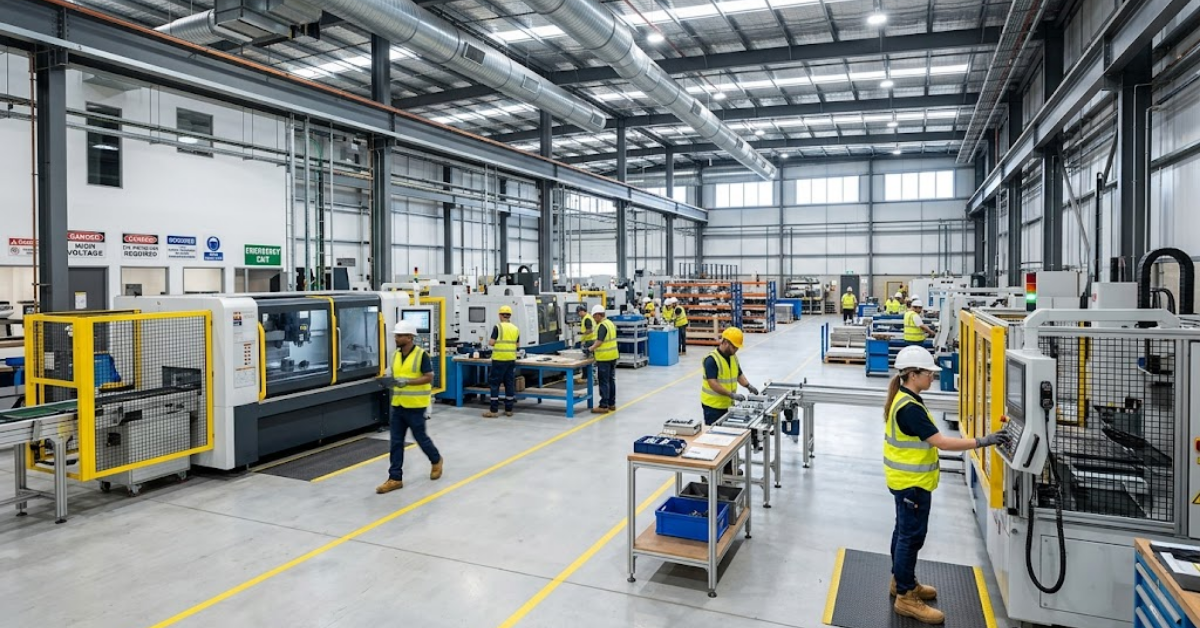
Ventilation systems, machine guarding, automated handling equipment, traffic management systems, and well-designed workstations all reduce exposure to hazards by addressing risks at their source. Investing in infrastructure that protects employees often delivers operational benefits too, including improved workflow, fewer interruptions, and greater consistency across production processes.
Specialist Advice Leads to Better Long-Term Decisions
Not every workplace challenge can be solved using a standard solution. Manufacturing processes, hazardous substances, and production environments vary significantly, meaning safety systems should be tailored to the specific risks present.
Seeking professional LEV consultancy allows businesses to assess whether existing extraction systems are suitable, identify areas requiring improvement, and develop solutions that align with both operational needs and regulatory requirements. Independent consultancy can also help organisations avoid expensive design mistakes by ensuring systems are specified around real workplace conditions rather than assumptions.
Build a Workforce That Takes Ownership of Safety
Policies alone do not create safe workplaces. Employees are far more likely to follow procedures when they understand why they exist and feel encouraged to contribute to improvements.
Organisations with strong safety cultures actively involve employees in reporting hazards, suggesting improvements, and reviewing working practices. This collaborative approach often identifies practical solutions that management alone may overlook while strengthening engagement across the workforce.
Regular refresher training, toolbox talks, and open communication ensure safety remains part of everyday decision-making rather than an occasional discussion.
Preventive Maintenance Protects People and Performance
Equipment failures rarely affect productivity alone. Faulty machinery can quickly introduce new safety risks, increase manual handling, or create hazardous working conditions.
Preventive maintenance programmes reduce these risks by identifying wear, damage, or declining performance before failures occur. Scheduled inspections, planned servicing, and condition monitoring help maintain safe operating standards while extending equipment life and reducing unexpected production stoppages.
A proactive maintenance strategy benefits both operational reliability and workforce safety.
Measure Success Beyond Accident Statistics
Low accident rates are important, but they should not be the only measure of a successful safety strategy. Near-miss reporting, equipment reliability, employee feedback, corrective actions, and safety audit outcomes all provide valuable insight into how effectively risks are being managed.
Monitoring these leading indicators allows organisations to identify emerging issues before they result in injuries or operational disruption. Continuous measurement also supports informed decision-making and demonstrates a commitment to ongoing improvement rather than reactive problem-solving.
Continuous Improvement Creates Lasting Results
No workplace remains static. New equipment, changing production demands, updated regulations, and evolving technologies all influence how risks should be managed.
For this reason, effective safety strategies are never considered complete. The strongest organisations review procedures regularly, learn from operational experience, and refine their controls as circumstances change.
This commitment to continuous improvement helps businesses remain compliant while creating workplaces that are adaptable, resilient, and better equipped for future growth.