
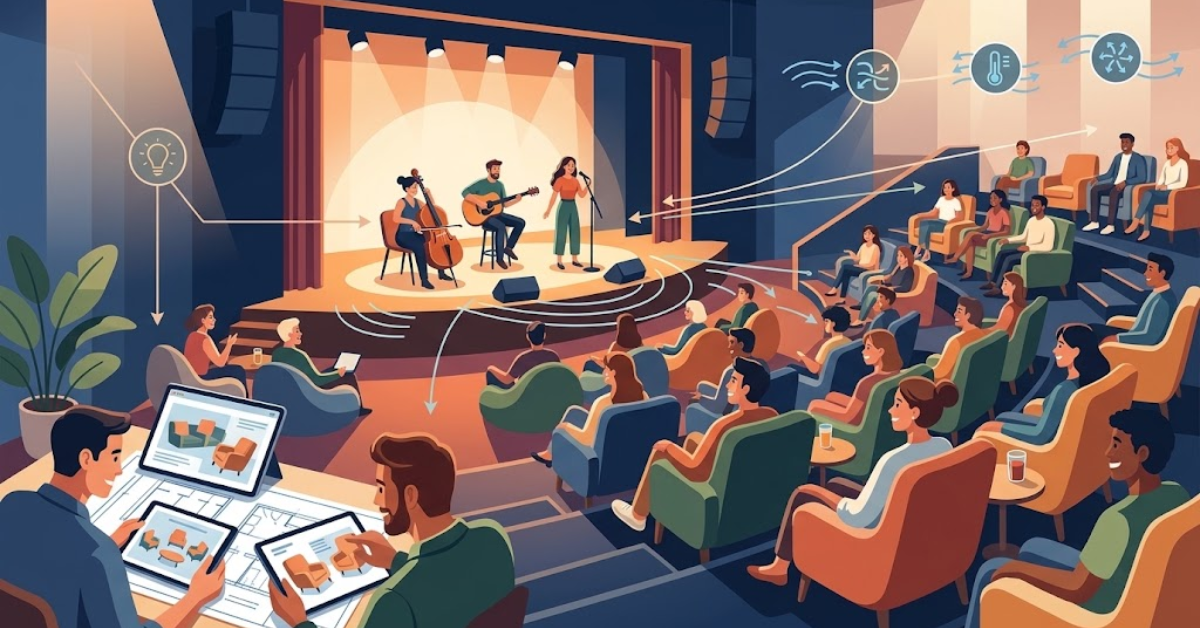
A successful live event is shaped by much more than what happens on stage. From the moment guests enter a venue until the final applause, their surroundings influence how relaxed, engaged and immersed they feel. Whether a space hosts theatre productions, concerts, talks or community performances, comfort should be considered alongside acoustics, visibility and atmosphere.
Thoughtful venue design can improve the experience for audiences while also creating a practical environment for performers and staff.
Start With the Audience Experience
Comfort begins with understanding how people will use the space. Audience members may spend several hours inside a venue, so seemingly small details can make a significant difference.
Seating should provide suitable support and enough personal space without making the room feel disconnected. The layout also needs to give as many guests as possible a clear view of the performance. Well-planned auditorium seating can help balance audience capacity with comfort, sightlines and the overall character of the venue.
The distance between the audience and stage is important too. Bringing spectators closer to the performance can create a greater sense of intimacy, while larger venues may require tiered layouts to maintain good views throughout the room.
Pay Attention to Temperature and Ventilation
A venue can have impressive interiors and excellent performances, but an uncomfortable temperature can quickly become distracting. Heating, cooling and ventilation therefore need to reflect both the size of the room and the number of people using it.
Large audiences can cause temperatures to rise rapidly, particularly during longer performances. Effective ventilation helps maintain a pleasant environment without creating disruptive noise or uncomfortable draughts.
Venue operators should also consider how conditions change throughout the year. A space that feels comfortable during a summer concert may require a very different approach during a winter production.
Create the Right Acoustic Environment
Sound quality is fundamental in spaces designed for live performances. Excessive echoes, background noise or poor sound distribution can make it difficult for audiences to follow what is happening on stage.
The materials used throughout the room can influence acoustics. Wall treatments, flooring, curtains, ceiling features and upholstered surfaces can all help manage how sound travels.
Acoustic planning should also match the venue’s purpose. A room primarily used for spoken-word performances may have different requirements from a concert hall or multipurpose community venue.
Make Movement Simple
Comfort is not limited to the time guests spend watching a performance. People should also be able to enter, leave and move around the venue easily.
Clear aisles, sensible entrances and exits, accessible routes and straightforward signage can prevent unnecessary congestion. Toilets, refreshment areas and cloakrooms should also be easy to locate without disrupting the main performance space.
Accessibility needs to form part of the overall layout rather than being treated as an addition later in the design process.
Use Lighting to Shape the Atmosphere
Lighting plays both a practical and creative role. Before a performance, warm and balanced lighting can make the venue feel welcoming. Once the event begins, carefully controlled lighting directs attention towards the stage while allowing people to move safely when necessary.
Transitions between different lighting levels should feel smooth rather than abrupt. Corridors, stairs and exits also require sufficient illumination throughout the event.
Design With Flexibility in Mind
Live venues rarely host only one type of event. A hall might accommodate theatre one evening, a presentation the next day and a musical performance at the weekend.
Flexible layouts, adaptable lighting and versatile staging can allow the same space to serve different purposes without sacrificing comfort. By considering audiences, performers and practical operations together, venues can create environments where people can focus on the experience rather than the space around them.


