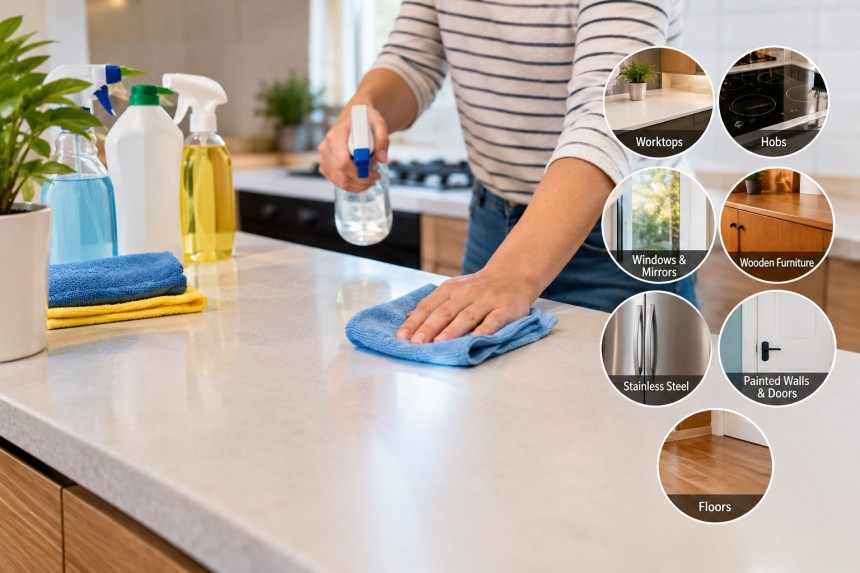
When cleaning, the choice of spray has an effect on the rate of grime lift, the final appearance, and the preservation of the surface’s finish. A product suited to a sealed worktop can leave marks on untreated timber, streaks on glass, or residue on a hob.
Most common cleaning mistakes involve using too much liquid, spraying delicate areas directly, or skipping a small patch test. The right method depends on the material, its finish, and the type of dirt present. These seven surfaces need extra care.
Here are seven surfaces that you are probably cleaning the wrong way with the wrong cleaner:
1. Kitchen Worktops
Worktops are prone to collecting grease, food residue, crumbs, and fingerprints throughout the day. A suitable multi-surface cleaning formula removes everyday dirt without leaving a sticky film behind.
A multi-surface cleaner suits regular cleaning needs across sealed worktops, tables, cupboards, appliances, glass, and mirrors. A light spray reduces residue, while an organic cotton cloth lifts dirt instead of spreading it. Wiping in one direction also helps prevent cloudy marks on smooth finishes.
Stone, laminate, and sealed timber still require additional care. Standing moisture can enter joints or edges, so the cloth should be damp rather than drenched. You should always start with a small spot test in a hidden area before tackling an unfamiliar countertop.
2. Hobs
Hobs often receive the wrong treatment because burnt-on food looks like a job for a harsh abrasive. Scouring powders and rough pads can scratch glass or dull a polished surface.
The safest approach starts once the hob has cooled. A lightly dampened cloth loosens fresh spills, while repeated gentle passes remove film without dragging grit across the surface. Spray the cloth rather than flooding controls, seams, or areas around electrical components.
Burnt residue requires patience, not extra product. A suitable scraper, used according to the hob manufacturer’s instructions, removes hardened deposits more safely than aggressive scrubbing.
3. Windows and mirrors
Glass becomes streaky when too much cleaner is applied or when a cloth contains fabric-softener residue. Direct spraying can also send liquid into frames, seals, and nearby fittings.
Applying a small amount to a clean, lint-free cloth keeps moisture under control. Wipe the pane in overlapping strokes, then finish with a dry section of the cloth. Cleaning in strong sunlight can dry the liquid before wiping is complete, leaving visible marks.
Paper towels often shed fibres and encourage you to rub repeatedly. A washable cloth gives better control, especially around mirror edges where trapped moisture can damage the backing.
4. Wooden furniture and cupboards
Wood needs a more restrained cleaning approach than sealed plastic or laminate. Excess water can lead to swollen joints, raise the grain, or leave dull patches on an unsealed finish.
Spray the cloth lightly, never soak the furniture, and wipe away moisture immediately. The product page advises spraying sparingly on wood and spot testing when the finish is uncertain. Waxed, oiled, painted, and lacquered timber can react differently, so the finish determines the safest routine.
Dust should be removed before damp cleaning. Otherwise, particles can drag across the surface and create fine scratches.
5. Stainless-steel appliances
Stainless steel quickly shows fingerprints, grease, and water spots. A generous spray creates extra work because residue settles around handles, seams, and brushed grooves.
A damp cloth should follow the grain of the steel rather than move in circles. A second, dry cloth removes remaining moisture and helps prevent fresh water marks. Use the same direction across the entire panel for an even appearance.
Bleach-based mixtures and abrasive pads do not belong in ordinary stainless-steel cleaning routines. Mixing products also creates unnecessary chemical risks, particularly in enclosed kitchens.
6. Painted walls and doors
Painted surfaces need a gentle test because matt, eggshell, satin, and gloss finishes respond differently to moisture and friction. A spray that works on a sealed door can leave a shiny patch on matt paint.
The cloth should carry most of the product, with light pressure used on fingerprints and small marks. Repeatedly rubbing one spot can remove paint or change its sheen before the dirt disappears.
A hidden section behind furniture provides a sensible test area. If the colour transfers to the cloth, stop cleaning and follow the paint manufacturer’s care instructions.
7. Floors
Using a multi-purpose spray directly on a floor often leaves too much liquid underfoot. Pooled moisture can affect timber, laminate joints, and painted areas, while residue attracts fresh dirt.
Apply the cleaner sparingly to a cloth or suitable mop, then make a separate pass to remove excess moisture. Loose grit needs sweeping first because damp mopping can move abrasive particles across the finish.
Floor type matters. Natural wood, laminate, vinyl, and sealed tile each have different care requirements, so the flooring manufacturer’s guidance should take priority over a general cleaning habit.
Conclusion
Better cleaning starts by matching the spray and method to the surface. Use less liquid on glass, wood, appliances, and floors, and keep abrasive tools away from delicate finishes. A clean cloth matters as much as the formula because trapped grit and residue cause avoidable marks.
Before the next cleaning session, households should check each room’s surfaces and choose one careful method for every material. A small patch test can prevent an expensive repair.