A curious thing happens when an AI image tool removes countdown timers, upgrade banners, and credit meters from the interface. The user stops thinking about limits and starts thinking about the work. Most free AI platforms are designed to remind you constantly that you are using a free version, and that reminder comes at a cognitive cost. Each “go pro” button that flashes, each credit counter that ticks down, each interstitial ad that interrupts the generation flow fragments attention and breaks creative momentum. Image to Image does something unusual in this category. It does not add gamification layers, consumption trackers, or persistent upgrade nudges. Instead, it presents a clean workspace where the only visible elements are the source image, the prompt field, and the generation controls. That absence of friction is not a small detail. For anyone who generates dozens of images per week across multiple projects, it changes how much work a session can support before fatigue sets in.

Why Interface Distraction Matters More Than Raw Generation Speed
Generation speed is the metric platforms love to advertise. One second per image, two seconds per image, ultra-fast inference, blink-and-you-miss-it output. Speed matters, but only when the user can stay focused enough to use that speed effectively. A platform that generates in one second but interrupts the user with an upgrade prompt after every three generations is not truly fast. The interruption resets attention, and the cost of re-engaging often exceeds the time saved on generation. A platform that generates in six seconds but never breaks the user’s concentration can feel faster in practice because the work flows continuously.
What Happens When the Interface Contains No Distractions
A clean interface does not just look better. It supports a different kind of creative behavior. Users can iterate freely without counting down to a limit. They can test the same source image across different model pathways without watching a token balance decrease. They can refine prompts gradually, generating multiple versions of each refinement step, without feeling pressure to make every generation count. This behavior is difficult to measure in benchmarks but easy to recognize in practice. The session lasts longer, the outputs improve, and the user leaves with more usable assets than when they arrived.
A Four-Step Workflow Designed for Sustained Focus
The platform’s core interaction is intentionally simple. Simplicity in design usually signals confidence: the platform believes the user will stay because the work flows, not because of lock-in tactics or artificial scarcity.
Step One: Upload the Source Image Without Interruption
No Account Screen, No Credit Check, No Gate
The user selects an image file from their device and uploads it. The platform does not pause to ask for an email address, does not display a “sign up to continue” modal, and does not flash a credit balance before allowing the first generation. The upload takes place immediately, and the source image appears in a fixed panel that stays visible throughout the session.
Step Two: Write the Transformation Prompt
The Prompt Panel Retains Text Across Generations
The user describes the desired change in a short text instruction. Unlike platforms that reset the prompt field after each generation or hide previous prompts in a collapsed history panel, this interface keeps the text visible and editable. When the user generates an output and decides to refine the instruction, the prompt remains in place, ready for editing. This continuity reduces the cognitive effort of re‑establishing context with each generation.
Step Three: Select a Model That Matches the Task
Model Choice Is Presented Without Technical Overload
The model selector sits in a prominent position but does not demand attention. Available options include pathways associated with different visual tendencies: a model suited for high‑fidelity preservation of source image structure, one for fast iteration and exploration, one for photorealistic rendering, and one for extending static images into short motion clips. The user selects the model that seems most appropriate for the task at hand. The interface does not push one model over another, and there is no “premium model” gate that blocks access behind a paywall.
Step Four: Generate and Iterate Without Counting Down
The Generation Loop Supports Unlimited Refinement
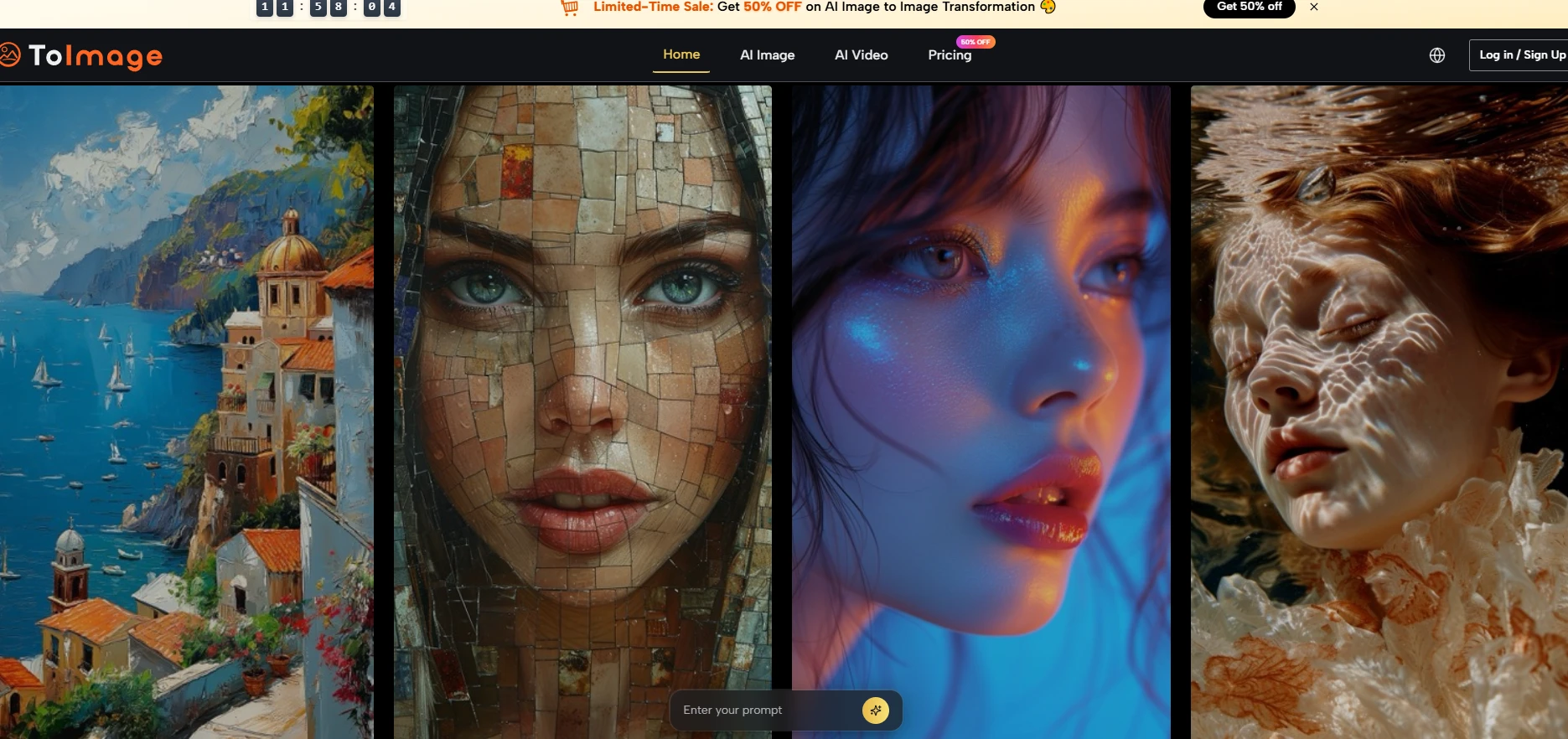
The user clicks the generate button. The platform processes the request and returns an output. If the output matches expectations, the user downloads it and moves on. If not, the user adjusts the prompt, switches the model, or keeps everything the same and generates again. There is no credit meter ticking down beside the generate button, no “you have X generations remaining” warning, and no interstitial ad promoting a paid plan. The only interruption is the user’s own decision to stop.
What the Interface Does Not Contain and Why That Matters
The absence of certain interface elements is as important as the presence of others. The platform contains no visible third‑party advertisements, no persistent upgrade banners, no credit counters, and no countdown timers. It does not display a “free tier” label that reminds the user of their secondary status. It does not dim the generate button after a certain number of uses. It does not inject a pop-up asking for a subscription before allowing the user to download an output. These absences create an environment where the user can focus entirely on the creative task. The platform respects attention as a scarce resource and does not extract it through dark patterns or interruptive marketing.
Comparison: How Interface Design Affects Real Work
The table below contrasts how different interface approaches affect the experience of generating multiple images from a single source. The comparison is based on observable interface behavior rather than claimed performance metrics.
| Interface Dimension | ToImage AI Approach | Credit-Limited Platforms | Ad-Supported Platforms |
| Focus preservation | High; no counters or banners break attention | Medium; credit warnings create psychological pressure | Low; ads shift layout and interrupt flow |
| Iteration freedom | Unlimited within session; no artificial scarcity | Restricted; users conserve credits instead of experimenting | Restricted; ads interrupt before each generation |
| Prompt continuity | Text persists across generations and model switches | Varies; often resets or requires history navigation | Varies; often resets after each generation |
| Account requirement | None for generation; no forced sign-up | Usually required to track credits | Usually optional but ads appear regardless |
| Session length | User‑determined; no hard limit | Credit‑determined; session ends when credits run out | User‑determined but interrupted frequently |
What the Platform Does Not Promise About Free Access
Free access without visible limits does not mean unlimited access without constraints. The platform does not guarantee that every generation will succeed on the first attempt. Output quality depends on the source image’s resolution, lighting, composition, and the clarity of the transformation instruction. The platform does not promise that all model pathways will produce usable results for every task; users may need to experiment with different models to find the one that suits their specific source image. The platform also does not guarantee that outputs will be free of visual artifacts or that complex transformations will succeed without multiple refinement rounds. The absence of credit counters and upgrade banners is a design choice that supports focused work, but it does not eliminate the inherent variability of AI generation.

Who Benefits Most from an Ad‑Free, Countdown‑Free Workflow
Creative professionals who integrate AI generation into their daily workflow benefit most from an environment that removes friction. A content marketer generating multiple ad variants from the same product photo can iterate freely without watching a token balance decrease. A social media manager producing consistent on‑brand visuals across dozens of posts values a tool that does not interrupt the flow with upgrade prompts. A designer exploring style variations of a single sketch can test different model pathways without feeling pressure to make every generation count. A hobbyist experimenting with personal photos can take as many attempts as needed to achieve the desired result. For users who generate an image once a month, the presence of credit counters or upgrade banners may be a minor annoyance. For anyone who generates images regularly, the difference between a distracted workflow and a focused one is the difference between finishing a project and abandoning it. Image to Image AI makes the bet that removing distractions matters more than adding features, and for the kind of sustained creative work that produces real results, that bet holds up in practice.