
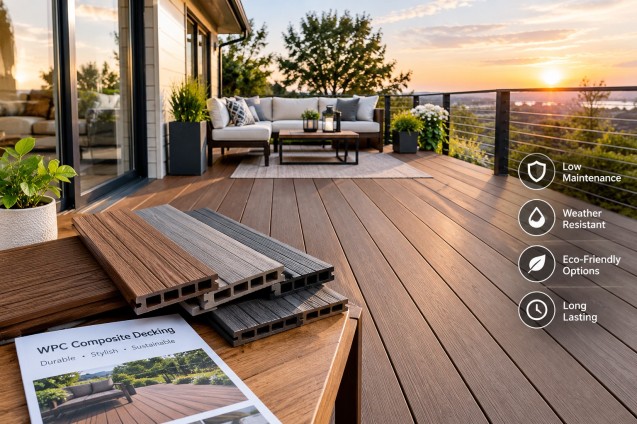
A beautiful outdoor space should be easy to enjoy without demanding constant maintenance. Whether homeowners are upgrading a backyard patio, building a garden deck, or improving a commercial outdoor area, the materials they choose can affect both appearance and long-term costs. Traditional wood offers natural character, but exposure to sunlight, moisture, and changing temperatures can increase maintenance needs over time.
Wood plastic composite (WPC) decking has become an appealing option for people seeking a balance between style and practicality. Made from a combination of wood-based materials and plastic polymers, these products are designed for a range of outdoor applications. However, quality can vary between manufacturers, making careful selection essential.
Understanding material composition, manufacturing standards, design options, and environmental considerations helps buyers choose decking that suits their property and long-term plans.
Understanding the Value of WPC Composite Decking
WPC decking combines selected wood fibers or wood flour with plastic polymers to produce boards for outdoor flooring. Depending on the formulation and construction, these boards can offer resistance to moisture, insect damage, and everyday environmental exposure.
Unlike conventional timber, composite decking generally does not require routine painting or staining. This can make it attractive to busy homeowners, property managers, and commercial developers who want to maintain an appealing outdoor environment without extensive upkeep.
Manufacturers offer different board profiles, including hollow and solid designs, to meet varying project requirements. Surface textures and protective coatings may also influence appearance, cleaning needs, and resistance to fading or stains.
Nevertheless, not every composite product performs identically. Buyers should review technical specifications, warranty conditions, and installation instructions before making a decision. Choosing a suitable product for the intended application is more important than relying on appearance or price alone.
What to Look for in a Reliable Manufacturer
A dependable manufacturer should provide clear information about product composition, dimensions, available finishes, and expected performance. Consistency matters because variations in board size or quality can complicate installation and affect the finished appearance.
Contractors and homeowners should ask about quality-control procedures, relevant testing, warranty coverage, and recommended installation methods. It is also useful to request samples to assess color, surface texture, and overall finish before ordering materials for a larger project.
Supply reliability is another important consideration. Large residential developments and commercial projects may require substantial quantities of decking delivered according to a construction schedule. Buyers should confirm production capacity, lead times, packaging, and the availability of compatible accessories.
When planning a complete outdoor renovation, consulting a wpc fencing supplier can also help buyers explore complementary products for coordinated outdoor designs. Evaluating the available options early can make material selection and project planning more straightforward.
Creating Outdoor Spaces That Complement Home Décor
Decking plays an important role in the overall design of a garden, patio, or terrace. Its color and texture can connect outdoor flooring with exterior walls, landscaping, furniture, and architectural details.
Brown and teak-inspired finishes can create a warm, natural appearance, while gray and charcoal tones often suit contemporary homes. Textured surfaces can add visual interest, although buyers should also consider cleaning requirements and the product’s suitability for the intended location.
A successful design considers how people will use the space. A family patio may need room for furniture and outdoor dining, while a commercial terrace may require materials suited to frequent foot traffic. Poolside installations also need careful attention to drainage and slip resistance.
Planning these details before installation helps create a balanced outdoor environment that combines practical use with attractive design.
Environmental Impact and Everyday Maintenance
Environmental performance is an increasingly important consideration in construction and home improvement. Some WPC decking products incorporate recycled plastic or wood-based materials, potentially reducing the demand for certain virgin resources. However, the actual environmental benefits depend on material sourcing, manufacturing processes, transportation, durability, and disposal options.
Buyers should ask manufacturers for specific information about recycled content and end-of-life management. Composite decking is not automatically recyclable in every location, so understanding local facilities and product composition is worthwhile.
Routine care is generally simple. Sweeping away leaves, removing spills promptly, and washing boards periodically with a suitable cleaner can help maintain their appearance. Proper drainage and ventilation are equally important because water accumulation and incorrect installation can create avoidable problems.
Following manufacturer guidance helps protect the investment and supports better long-term performance.
Planning for Long-Term Value
Selecting composite decking is a decision that should consider more than the initial purchase price. Product quality, installation costs, maintenance requirements, warranty terms, and suitability for local weather all influence the overall value of an outdoor improvement project.
Homeowners should compare several options, review technical documentation, and obtain professional advice when structural requirements are involved. Contractors should also consider delivery schedules and the availability of matching components before finalizing project plans.
WPC decking can provide a practical alternative to traditional timber when the product is appropriately selected, correctly installed, and properly maintained. Its combination of design flexibility and relatively low maintenance makes it worth considering for many residential and commercial spaces.
As outdoor living continues to influence home design, informed material choices will remain essential. Working with knowledgeable manufacturers and prioritizing reliable specifications can help create attractive outdoor areas that serve their intended purpose for years to come.